
Though this post is about obsessive love of art generally, I titled it after my newest obsession, P!nk—specifically, her superb new album and tour.
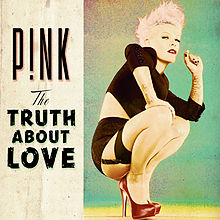 One sure sign of when this particular obsession will wane: when I stop titling everything with P!nk song titles.
Obsessive love of art: For as long as I can remember, I have been obsessive when I get into any new aesthetic interest of any kind, which in my life has meant a writer, a musical act or a filmmaker (other forms of art have just not lent themselves to this for me). I’d describe my approach as “obsessive” in three ways:
(1) I go “all the way in” once I become more than a little interested in a particular artist or act, wanting to read every word, listen to every song on every album, watch every film. It’s actually even more extreme than that: I turn each interest into a research project—reading all the criticism I can get my hands on, learning about the artists’ lives and influences, checking out discussion boards, and so on. I know I’m not unique in these ways, given that ample opportunities for “geeking out” like this are easy to find. But I do know that I tend to be more single–minded than most of my friends and fellow geeks in this way, especially given the next point:
(2) I have a very hard time keeping these obsessive journeys to myself, as this blogging makes evident. I annoy everyone around me, by trying to draw those closest to me into my obsessions and by trying to offer acquaintances repeated references to them in conversations that have nothing to do with them. In this sense I’ve been acting like a “blogger” for much longer than there have been such things as blogs.
(3) As I tend to think this way in all respects, so with aesthetic obsessions I am constantly scanning for opportunities to synthesize and analogize across very different contexts; this leads to trivial choices like suddenly titling everything after P!nk songs, but it affects my thought processes in much deeper and more extensive, non–trivial ways as well.
And to the place I wanted to arrive in the beginning of this post, why I choose not only the word “obsessive” but the word “love”: When developing a new relationship with a particular person who I find very interesting, I (like most people, I suspect) experience all three of the above as well; I look for ways to spend more time with her or him, in a diverse range of ways; I strive to learn about life stories, values, quirks, and so on; I try to integrate her or him into social circles I already have, either directly or, failing that, indirectly; and she or he, ideally, reshapes how I think.
This is why I’ve never related to what I would call the “Pandora” approach to music listening, for instance, though I think many people use this approach when consuming writing or film as well, and I think it’s an approach I was familiar with long before there was such a thing as “Pandora”: Scanning a range of aesthetic connections for the “best” and discarding the rest quickly, rather than living with an artist all they way for a long, focused time, strikes me as parallel to “mingling” or “networking” socially. For instance, I’m currently listening to almost nothing but P!nk, and while I do not love all the tracks on every album as much as I do those on the nearly perfect Truth About Love album, listening to those tracks is deepening my grasp of her art, giving me insight into her goals, and—most importantly—keeping me connected to the unique spark that she ignited in me at last week’s concert. Isn’t this what we do, when we’re our best selves, with interpersonal relationships? Why do so few people I know treat relationships with artists differently?
I suspect the whole “don’t trust the artist, trust the tale” aphorism may be one explanation (at least for other middle class people; I acknowledge that my approach requires a lot of leisure time and a lot of luxury income). But to me, that reminds me to trust in the compassionate insight of Bob Dylan’s songs, not in the dismissive callousness of his mediated persona. I don’t think it means treating the artistic texts themselves as if they stand apart from a relationship to the artist and the artist’s world. If art is communication, which I believe it is, then why shouldn’t I approach art just as I would any other communication—attending to the history, the context, and the dynamic personhood and not only the message itself?
 Selling Dust
Indeed, sir. I so appreciate this, for so many reasons. One is, a loving chuckle arises in me, when I read your extremely self-aware description of your obsessiveness. Not only for the recognition (as a fellow obsession-prone listener/consumer), but for what I know about your ontological (read, astrological) makeup. A detail-obsessed Virgo with moon in narrow-focused, intense-passion Aries?! You bet you are. 🙂
One more thing. You ask, why do so many treat relationships with artists differently than interpersonal relationships? It’s an intriguing, and important, question. And one that I think can also be flipped on its head. Or, combining them, why is it that people don’t take more seriously the relationship with artists and those in their lives?!