
 About six weeks ago I was letting my fingers roam through a used record store, as usual, and noticed on the top rack—where they like to put more deluxe packages that are oddly sized, that cost more and that they want to sell by placing them where your eyes can’t miss them—a surprisingly cheap copy of the 25th Anniversary Reissue of R.E.M.’s Green. The record store design experts won, in this case, because I would never, ever, at this point six weeks ago, have applied my “find the band’s name card and flip through the stacks” finger–roaming practice to the R.E.M. section of any record store, and therefore would not have seen this surprisingly cheap copy.
As you’re likely gathering, I bought the reissue box. Why, if I never check the R.E.M. section? Why, if I never liked any of the hits from Green other than “World Leader Pretend,” and indeed, beyond “never liked,” found “Stand” and “Orange Crush” especially annoying songs that have typically led me to mock and denigrate and generally avoid the band? The only R.E.M. album I had ever owned, before this purchase six weeks ago, was Out of Time, and I knew full well that this was not “real R.E.M.” anyway, that this album is characterized by diehard fans of the group as an anomaly, as their worst album, their poppiest album, the album on which they sell out to the corporate hitmaking impulse most utterly. Not that I’d listened to it in years anyway. All of which was perfectly fine with me because “Stand” and “Orange Crush” annoyed the hell out of me back in 1989, and I was not especially impressed by the other songs I, like everyone in my cultural group, had been inundated with over the years: the song about everyone hurting, the song about Andy Kaufman and Fred Blassie and space exploration, the song about the world ending, and “I am Superman,” itself perhaps even more grating than “Stand.”
The answer to why I bought the reissue, in this context, is simple on one level: I’m greedy for reissues, as someone who embraces with my listening processes and with my wallet the “museum curator” approach to repackages most obviously represented, all over the walls of our living room, by Sony’s fancy metal–spine Miles Davis boxed sets and the lavish Smashing Pumpkins reissue sets. I like to rediscover music I already love, and deepen that love, through a historical exploration of streams of influence and growth, listening to albums as a whole, placing them conceptually in a path of artistic development over time, reading liner notes jammed with information and interpretation—as I say, “museum curator” style. Reissues fit snugly with how I listen and make sense of my musical experiences, and so I saw the price of the Green package, saw that it included in addition to a remastering of the album a bonus disc of a 1989 concert and thought, “I would like to check this out sometime.”
The thing sat on a shelf for two weeks, having been cursorily checked for completeness and function but otherwise untouched. Given how I deal with media, such as all the books that cost more than twice as much as this reissue box and that I let sit on shelves for years, unread, two weeks wasn’t too appalling, really. I was surprised how much I liked the album after a couple of listens, puzzled, trying to analyze why I liked it, why I was responding positively despite a distaste for the hit songs in my memory, despite the ultra–slick pop production that is off–putting in itself, despite Stipe’s annoying nasal imploring. Listening to the bonus concert once helped a little: I recognized for the first time how very, very tight this ensemble is. “I see now that they aren’t just being coy and pompous when they take songwriting credit four–as–one on all songs,” I thought, and I (after more listening) eventually authored a Facebook status update comparing their ensemble flexibility to The BORG. But after the Green reissue the puzzle of R.E.M. was still unsolved, and I craved more information, more evidence. So, as is my habit, I headed back to the stacks, seeking out deliberately for the first time ever the R.E.M. section for finger–roaming, and was delighted to see that as a direct result of the “25th Anniversary Reissue” series, I could find any of the IRS–era albums in their initial CD pressings for two or three dollars each. I knew enough to know that these are the albums so revered by the band’s “real” fans, the ones who mock me for owning Out of Time. I bought the first three and started exploring.
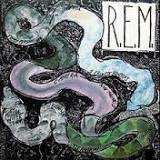
Murmur took a little extra listening, but I have gotten there at last, here, in the midst of my current R.E.M. obsession. I know the diehards valorize this first record as much as any, and I can at last connect with that. Reckoning, on the other hand—on my very first listen, in the car heading to school, I was stunned. This??? I thought, this is R.E.M., the “Stand” band??? But this music is fantastic! That was the place where the current obsession began full bore. Fables just amped it up further. I have listened to nothing else at all—well, excepting the occasional P!nk and Adele song on my iPhone—for a solid month. Life’s Rich Pageant is only the newest addition to the immersion.
I will return below to clarifying why I sometimes condescend to listen to songs on my iPhone, because that’s quite germane to what the R.E.M. obsession has taught me. But first, the music, the streams, the currents of influence and resonance and permanence—they have overwhelmed me. I knew only pop radio and MTV R.E.M. before this month; I had no idea until now that their IRS albums are the Rosetta Stone of modern rock music. I can hear decades of art, nascent, incubating on those albums. I can hear Thom Yorke, thirty years ago, listening as obsessively then as I am now to “Camera” and “Harborcoat” and “Pilgrimage,” hear Jeff Tweedy joining him in that journey and adding “Rockville” to his listening sessions. I can hear Jim James listening to “The Flowers of Guatemala” and “I Believe” back to back, and to “Feeling Gravity’s Pull” just as obsessively. I can hear (thanks to Ginny and Kristine) Eddie Vedder listening to “Moral Kiosk” and “Begin the Begin” and “Fall on Me.” I can hear Dave Matthews trying, in his very best songwriting moments, to rewrite “Cuyahoga” several different times. And these are just a few of the most prominent examples in the astonishingly deep vein of this primordial, pulsing musical geyser. Though it was Reckoning and Fables that each grabbed me immediately and drew me completely in, I actually first had the clear epiphany while listening to Murmur that what I was hearing—all this, that has been taken up and that now courses through the music of Radiohead and Wilco and My Morning Jacket and Pearl Jam so thoroughly and deeply, all these bands that I find exciting and invigorating—this R.E.M. music, from the early 80s in Athens of all places, would sound utterly fresh if released tomorrow on modern rock/alternative rock radio stations.
The obvious ideas to write now are that I envy those who discovered R.E.M. in 1982, or that I wish I had been exploring the band’s whole catalogue for all of the 23 years since I bought Out of Time instead of wasting my listening time by ignoring and dismissing the band. But to the contrary, I feel quite privileged to discover R.E.M. from the vantage point I describe here. Doing so gives me the chance to hear and see the geyser in all its effulgent splendor, to appreciate it from a downstream, by–the–delta perspective in which it lives in music, much later music, that I know so well. Kurt Cobain, for instance, so infamously gone now for two full decades (yikes!!!): I can hear him, too, as a young man not yet acquainted with Bruce Pavitt, listening to “Catapult” and “Time After Time” and “Old Man Kensey” as he imagined a sound that itself would help shape our current cultural landscape. And I can better appreciate this, I believe, because I rest now on the far side not only of Nevermind but of all its far flung offspring—“We could have a breed” indeed.
Jen Tuder shows her love for me by calling me “The KIINNNGGGG of Hyperbole,” and most of you reading this, sharing Jen’s sentiments, might figure that I’d verbally revel in and aggrandize my historicizing point of view on any band I discovered decades after most of my friends did, those friends who laugh at me while gently urging me on (Marcy, Greg J, Greg S, Nathan D, Karl). But here is why I feel especially lucky to be the weirdo who suddenly discovered in the summer of 2014 that someone else might not be an idiot if she listens to R.E.M. on purpose: I have come to believe, in these four weeks of intense listening, that this band is the very first major band to write and play with a genuine sense of rock music as history. Consider their place as just–past–college nerds in the late 70s, in the midst of punk’s deconstructive anti–hard–rock–and–folk–rock movement against the tide of corporate popular music history. What were hard rock and folk rock, the Led Zeppelins and Linda Ronstadts of the radio world in the mid–70s, made of if not their (apparently) unreflective assimilation of the legacies of urban and southern blues traditions, respectively? I’m not suggesting that the Jimmys, Page or Taylor or Croce, had no sense of history; I’m suggesting that they did not weave their senses of history into their music with the feel for postmodern reflexivity and irony and pastiche and explicit–idol–valorization and tradition–questioning that the Berry/Buck/Mills/Stipe BORG did. These four nerds did not just casually take up the whitewashing of African–American sounds and themes that made millionaires out of Elvis and John and Paul and Brian; they created music that acknowledged the ambiguity of these artists, music that explored these artists’, and their own, relevance to the suburban and rural southeast in the dawn of the Reagan era, their relevance to its social and economic and recreational and sexual concerns. What did the Velvet Underground and Television still mean, on the far side of the Sex Pistols, they asked? Yes, the Pink Floyds of the world were pompous, but what had they left behind with us, for us, as they moved from psychedelia to psychoanalytic, plodding symbology, they asked? If I were the one asking these questions in 1982, I’d have written a long–winded essay about it full of bluster and arcane syntax and, of course, plenty of self–deprecation. But these four guys, in the best jazz spirit, doing what Amy always calls on me to do, figured that rather than talk about their passion they would create about it, ask and explore these questions in their music. They would not just reflect the music they loved in their own art; they would interrogate that tradition and deepen it in the process. That’s what I mean by “the very first major band to write and play with a genuine sense of rock music as history.” And that’s why I feel so lucky that this band, of all bands, is the one I came to through the belated museum–style reissue–package approach that takes art history as the first purpose of art consumption.
This game of art–object–as–historical–artifact is certainly in some ways a troubling, even necrophiliac approach to music industry and listener resources. I know full well the “reissue” business is a calculated response to Mp3/Pandora music culture that I willingly embrace in making myself a target market for corporations, and I also know that the economics of this exchange often cheat new musicians like The Empty Pockets out of their fair chance to make a comfortable living through their art. But even though I listen to P!nk and Adele on my iPhone as gym companions and, occasionally, as car companions, enjoying the link between the spry freshness of their music and the digital wizardry of music–anywhere–you–like–all–the–time, I always prefer to sit calmly, with focus, on my couch or my bed, liner notes in hand, touching the physical artifact. I know that music, like a river, should teem with life and force, breaking down the calcified structures that would hold it in a safe, artifactual place. I love this about music. Yet I also love the way that like a river, music can immerse me fully, and like a river, music carries with it the traces, sometimes in hidden detritus and sometimes in glimmering reflection, the traces of its history, all that made it what it is now. So with gladness I resist Mp3/Pandora culture, and with sadness I conform to my White heritage as sketched so beautifully in “Cuyahoga”: I always prefer to take a souvenir.
 Selling Dust