
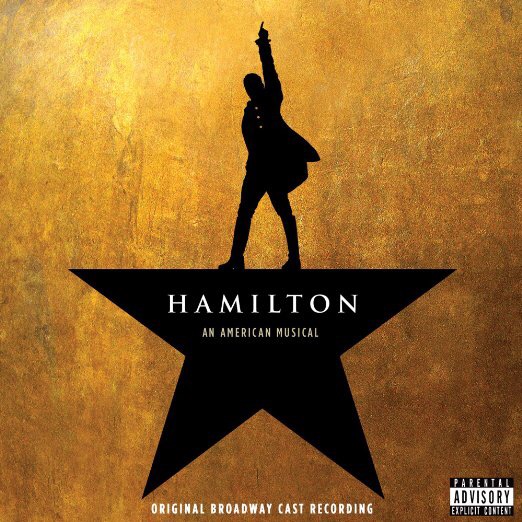
 This is not necessarily the coolest album cover ever, though I do think it’s effective in being instantly recognizable and in fitting the musical material. But I’m posting it because it’s what I listened to most often in the time frame when Laura S and Jnan each tagged me in that “post one great, iconic album cover” game on Facebook. I knew I wasn’t playing the game correctly when I posted it, as it’s not towering or extraordinary cover art, but I did so then and am posting this blog entry now because of how Hamilton: An American Musical has unique meaning for me–in direct relation to a person who never heard one note of it, a circumstance I argue is indeed a towering, extraordinary tragedy of compassionate living, social critique through art and passionate ardor for history and theatre.
My dear friend John T. Warren would have adored this show, just loved it so, SO much. No other piece of art I know, not even the stuff he actually listened to, comes close in my mind to matching his tastes so well: John was outrageously, bizarrely geeky about American history, especially its key individuals and the legends surrounding them; he loved musicals, especially ones that tried to integrate a more precise musical aesthetic that ranged beyond the Broadway show tune aesthetic; and he studied and was dedicated to exploring live performances, especially performances that highlighted racism and that challenged societal norms.
All that was deeply true about him in April 2011, when he was still barely alive and very close to the time when–according to the fancy, ragged-edged-paged hardcover annotated libretto for the show (John would have wet himself over this book, especially the ragged page edges)–very close to the time when Lin-Manuel Miranda was just starting to talk to a few people about this wacky idea for a concept album (his initial idea) based on the Ten-Dollar Founding Father. It’s as if this show was written for John, to John, that’s how uncannily matched it is for him as an audience member. It’s as if one shard of his spirit, a spirit distinctive in these peculiar ways, stayed with us, past April 2011, to live in and through this show.
I flatter myself a bit that John would, like me, be twitterpated beyond belief at the marvelous sound of Leslie Odom Jr.’s rich, warm voice meeting his ears at the exquisite start of the brilliant song “Wait For It.” I flatter myself again that I could say, breathlessly, to John, and know he would understand more than anyone else what I mean: “Imagine actually looking at him, live on stage while he sings this. Imagine it!”
And I flatter myself one more time that John would be most tickled by the one aspect of the over-the-top Hamilton cultural phenomenon that most tickles me, because John’d know what I know: that Andrew Jackson was a genocidal, racist cretin, and that the current choice to have Harriet Tubman’s image appear not on the ten-dollar bill, as was originally planned, but on the twenty, replacing Jackson–entirely because the Department of the Treasury (perfection! fitting irony beyond the grave!) acknowledged the cultural furor over this show–is a delicious outcome and may well be Miranda’s most pervasive and enduring impact on our country, perhaps centuries from now, even if he never writes another note.
And the moment in the show that stabs me with grief every single time, because I knew, we all knew, that John was someone who was exactly like Alexander in this one way above all other ways, is a moment in the last number of the first act, a magnificent portrait of this man who, like our John, died way too young but first, struggled every single morning at his desk, every single damn morning no matter what, by using words to fight what he saw as oppressive and to urge his colleagues toward transforming social institutions:
“How do you write like you’re running out of time?”
“How do you write like you need it to survive?”
Uncanny, I say again.
 Selling Dust