
Yesterday, I messaged my friend Zaki, a successful film blogger (the dude gets to meet Brie Larson!!! And, well, other people too, interviewees in the industry, other actors and directors and sundry film folks, but … but … Brie Larson! To my enduring relief, he assures me she’s quite friendly). I messaged because I was interested in using the movie theatre air conditioning as a means to beat the afternoon’s insufferable heat via a matinée, and I asked him—surely the world’s foremost “non–industry” expert on the Planet of the Apes film series in all its various incarnations—if I could meaningfully enjoy War for the Planet of the Apes without having seen the first two installments of the contemporary trilogy.  He wasn’t too keen on that notion, so I admitted that, to my chagrin, the only other even remotely reasonable choice for me was Wish Upon. I have already seen Wonder Woman and Spider Man: Homecoming (as I briefly touch upon in my previous blog entry) and The Big Sick and Baby Driver(excellent films, both of them; I haven’t figured out a hook to explore them in writing on this site, but nevertheless, excellent films), and the other current mainstream, showing–in–theatres–with–reliably–blasting–corporate–AC releases include Cars 3 (I’m still not over my disappointment with the second one, plus I don’t watch Pixar films without Amy) and Despicable Me 3 (I think I am the only person I know who doesn’t think minions are still funny) and Transformers (you have to be kidding me; I’d rather watch The Minion Movie projected onto a garbage heap without sound).
So Wish Upon was what I chose to watch, and I set off with deep skepticism born of my many, many trips to the theatre in which I’ve shelled out my cash like a dupe for a horror movie because I craved some thrills and shivers only to be confronted with yawns and shrugs; the “20% Fresh” Rotten Tomatoes score, my only information other than a couple of viewings of the trailer before I headed in, did not help my attitude. I promised Zaki I’d give him my impressions (here you go!) and expected they’d be riddled with mockery.
Yes, spoilers will follow. I must say, though, that’s precisely my point in this brief essay: Wish Upon is a film that can be spoiled. This makes it, I would argue, by this standard alone much better than I bargained for—one cannot “spoil” a lousy horror film. Here, let me go ahead and spoil every lousy horror film (the “supernatural” type as opposed to the “slasher” type) you will ever see, right now: There is a thing that cannot be easily understood within the terms of what it seems to be on its surface—a doll, a child, an old lady, a creepy totemic object, a dusty painting in an attic or basement, a book, a photograph or videotape, a widget of some sort, or sometimes, if we want to get really, really wild and crazy, it’s a place instead of a thing, perhaps a cabin or a well. This thing keeps appearing on the screen, to the tune of minor–key non–diegetic chords, being dealt with innocently by the unsuspecting characters (all of whom have no personality except as a visual stereotype) as if it’s merely the thing it appears to be; maybe, if we want to get really, really wild and crazy, one character quickly realizes what we know, that the thing is actually not what it seems, but this character can’t persuade any of the others. People start dying, and screaming, and screaming more, and dying more. 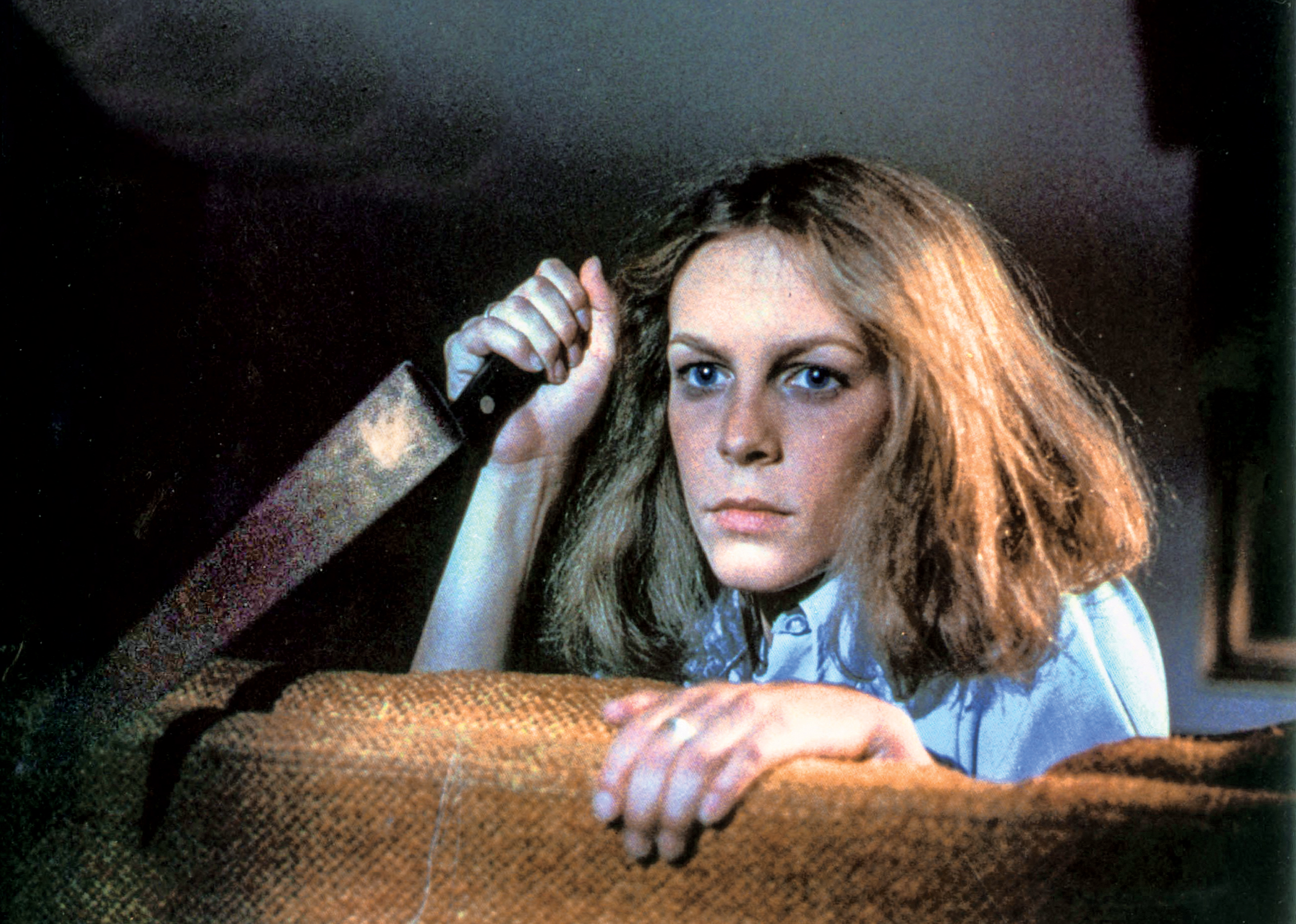 One survives, a young skinny woman, but she is then abruptly killed as the credits begin to roll in an effort to ironically distance the film from the 1970s genre (yes, those were “slasher” films, but we can’t be expected to be precise about details, it’s just irony) in which Jamie Lee Curtis actually lived. Sometimes, if we want to get really, really wild and crazy, one of the innocent–seeming characters was deliberately up to something nasty the whole time. Surprise!
But I wanted my air conditioning, and I was willing to settle for being bludgeoned by something very much like the farrago of foolishness that I just described. Joey King is a very smart, very funny young actor who I adored in both White House Down (how is it possible in any earthly way to be sharing every scene in which you appear onscreen with Channing Freaking Tatum and still manage to be just as charming as him the entire time? How?) and in Fargo (everything I just said applies equally well to sharing the screen with Allison Tolman), and I went in grumbling about the depths of screenplay hell that female teenage actors are compelled to accept in order to get Hollywood roles. I assumed that, quite obviously, the oddly shaped music box I’d seen in previews would be the “thing that’s not what it seems,” and that lots of high school kids (probably parents and neighbors, too) would scream and die, and Joey King would survive until the very end when she is abruptly killed. In the meanwhile, there’d be teenage sex and, also, house parties with swimming pools swirling with teenage sex, and, also, arguments in high school hallways about, well, teenage sex and furthermore about what to do about the oddly shaped music box that sure does, by golly, seem to be getting people all around us killed.
And every single one of those expectations was, I suppose, confirmed. Sort of. If you watch the film with that lens of expectations and do not allow yourself to engage it as it is, it’s all of those things almost exactly. There is no swimming pool, and there’s vastly less teenage sex than I expected (more on that later), but it’s easy to see how you’d end up grousing as you head for the exits, “yup, 20% Fresh is about right, maybe generous.” But why would you bother to see it, if you’re not willing to allow the film to establish its own terms and offer something more complicated than what you expected? I suppose there’s some world in which the new Transformers movie is more complicated than I expect (no there isn’t; it’s Michael Bay, but anyway, let’s just say so for the sake of argument)—but here’s the thing: I’m not planning to go. Ever. If you’re a filmgoer who buys your ticket, or much, much more disappointingly, a film critic, and you see Wish Upon and come away with nothing other than “yeah, the box was a supernaturally cursed thingamabob that was not what it appeared to be and people indeed died, blah blah blah” then you let the film down—the film didn’t let you down.
No, Wish Upon is not a cinematic masterpiece—not even if we lower the bar from the very highest stratosphere of masterpiece cinema (Akira Kurosawa put it there) to the more appropriate popular–genre–bullseye level that Zaki assures me War for thePOTA attains or that I’d ascribe to a film like Prisoners or, to keep it more firmly in the horror/supernatural realm, a minor success like It Follows. Wish Upon is not even quite as good as It Follows, probably (it’s close), but here’s what it is: A satisfying tale, reasonably well told especially in cinematic genre terms, of what happens when you wish for aspects of your life to be different. The closing track on Living Colour’s second album, Time’s Up, titled “This is the Life,” insists that wishing won’t change your life and that you must accept your own responsibility for confronting and transforming your life’s circumstances. Vernon Reid may not be Jean–Paul Sartre as existentialist writers go, but I’ll fight anyone who suggests that Living Colour, just because it’s popular art, can be trivialized. 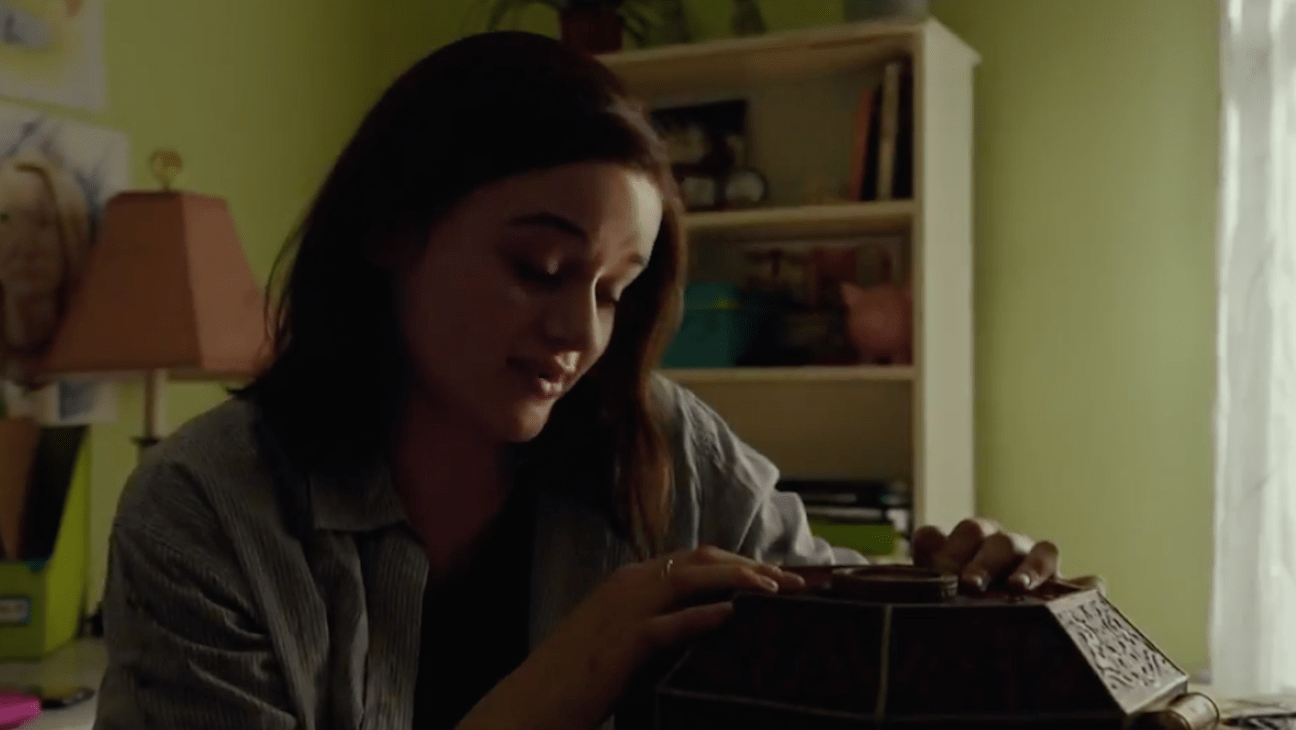 Wish Upon takes up this same theme and, in doing so, plunges cinematically into what appears on its surface to be the “demonic murdering supernatural presence inside a thingamabob” subgenre but draws equally heavily and in a convincing rather than merely derivative way on three other subgenres of horror–thriller to which I am, I admit, idiosyncratically very favorably disposed but for that reason qualified to discuss: (1) the “puzzle horror” subgenre most obviously represented by films with other core natures into which it is woven, such as the Hellraiser series, the Ringu series and the Blair Witch series; (2) the “arcane forms of grisly death” subgenre familiar from 70s cult–slashers outside the mainstream, from the Candyman series, and of late and in the mainstream from the Saw series, but much more robustly developed in my personal wooby among horror franchises, the Final Destination series; and (3) the not–limited–to–horror–films subgenre that beats in time with my cinematic heart, “what about multiple universes that we can explore with our will and what about their relationship to Nietzsche’s notion of eternal return?” as superbly articulated in the glorious Donnie Darko, Inception, Interstellar and La La Landand as articulated less superbly and only for those of us who are weird enough to be especially interested in The Butterfly Effect and Sliding Doors.
So the film presents a puzzle and sticks with it—along with the characters, we’re invited to figure out what’s going on with the thingamabob and why it’s so mean, and to wonder how its apparently “no way out” labyrinth might be outsmarted. The puzzle is not abandoned partway through like a Hitchcock MacGuffin, which is honestly what happens in nearly all of the “puzzle horror” subgenre films; no CGI demon ever emerges from it to chase Joey King’s friends into closets or whatever, which is the disappointment I expected. It remains a mysterious box, unto the closing shot of the film. Arcane forms of grisly death, while ever–present, are not especially richly extended here; we don’t learn anything like as much as we learn from a Final Destination film when it comes to the Unsafety of Everyday Objects (future blog entry title preview! Neon flashing lights! Stay tuned to Selling Dust for when I explicate the FD series and its brilliance!).  Yet once the FD allusion is clearly established, it is goosed for all it’s worth, and thus it gooses us: When the cousin of the friend is impaled on her bizarre artwork, the impaling at that point (late in Act II) from lead–up through the impact to the friend’s traumatic discovery of the body–and–artwork–form in one cohesive silhouette is handled cinematically with all the winking and liveliness that an allusion should be handled in a genre picture. And the payoff for those of us following the FD rhymes is simply delicious—I did not see the ending coming, not at all, yet within the terms established by the FD rhymes the film seems in the moment of Joey King’s death to be saying, licking its lips, “Of course you should have seen that coming, right?” just as, onscreen, diegetically, a character (and a decidedly distasteful one at that, needling us with the notion that we are now identified with antagonist rather than protagonist) says, “I never even saw her coming!” We were even set up for the moment within the film itself, narratively, in the opening sequence, having nothing to do with an FD allusion, an internal rhyme that’s been 90 minutes in coming. Delicious. And thereby, our goose is cooked.
And how are we set up for both the internal narrative rhyme and the satisfying FD climax, within the film itself? By a working out of one consequence of the multiverse concept, which in Wish Upon is interwoven with the “puzzle” from that other subgenre. In other words, the three subgenres that the film takes up in doing its work to scare us have been thoroughly braided together—puzzle, grisly death and multiverse all come together in the final high–impact collision. That’s a hell of lot to say for a film that gets 20%, a film that I expected to be a lot of swimming pool sex and CGI demons coming under the closet door.
There is more to say that’s positive, such as (1) the fact that the visual emphasis on the façade of Joey King’s dingy, dark house, early and late in the film, contrasts with the visual emphasis on the spacious white–carpeted mansion in the middle of the film as a reasonably interesting, if simple, symbolic cinematic metonym for King’s psyche and its rootedness in the claustrophobic depressiveness of poverty or the expansive luxury of creativity–releasing wealth or (2) the fact that the cast is excellent, with not only King but people like Ryan Phillipe and Elisabeth Röhm and Sherilyn Fenn and Shannon Purser taking their minor roles at least reasonably seriously (no one is hamming this film up as “my little role in a dumb horror picture”) or (3) the fact that the film resists the urge to sexualize the female teenagers who spend so much time onscreen, as Joey and her two friends play dress up to celebrate her boundless cash or to woo a love interest in outfits that emphasize their own senses of glamour and comfort rather than the male gaze and as the camera does not incessantly chop up the bodies of its female actors or present them as objects acted upon—each female character is consistently visualized as agentic throughout the film, even the beauty–myth–obsessed mean girls. The sexual desire in the film, which is present and is thematized to be sure, is actually quite chastely imagined for a PG–13 film these days.
There is also more to say about the film that’s negative, especially its racial politics, which are truly awful: The people who have information about the box, like the box itself, are linked by writing on the box, by the casting of two characters, and by exposition within the film to China; in this way, the film obsessively equates the “occult” and knowledge of it with the kind of Orientalist tropes pervasive in post–Victorian English literature and in mid–20th century Hollywood film, and nothing remotely redeems this racism.  Moreover, Joey King’s two friends include a young white woman who is portrayed as highly empathetic and a young woman of color who is portrayed as misanthropic and callous, and the one member of King’s nemesis group who is a young man of color is portrayed as a superficial social sycophant obsessed with documenting any activities that can demean others. I would completely respect a viewer who responded to my efforts to valorize this film with an indictment of its racial politics sufficient to dismiss it entirely; I would suggest, however, that the same indictment would be equally warranted in all but a very small handful of Hollywood films, nearly all of which will be more positively treated by film critics than Wish Upon will be.
Which brings me to what is my central point in this essay, since I know many of those who read it will never watch Wish Upon: I believe that film criticism should be responsive to the terms established by the work of art itself. This might seem a simple value on which to insist, but in my experience of reading film “journalism” it is exceedingly rare. Typically, film critics will instead seize upon the qualities of a film that enable them to either praise it or blame it in accord with terms of appraisal that are neither clearly explained by the so–called critic (it should be part of a critic’s job to establish her values in the writing) nor, even in the few cases when they are explained, embedded within the cultural context taken up by the film itself. Wish Upon establishes terms for its own success, terms intrinsic to the artwork itself: It seeks to explore the consequences of refusing existential responsibility for one’s life and it interestingly braids the subgeneric cinematic forms through which it explores these consequences, doing so with the help of strong performers and with at least an ordinary level of cinematic craft, though with appallingly thoughtless racial politics. I consider that accomplishment worthy of much more credit than I was willing to give it before I saw it, and I consider it worthy of serious film criticism. I no longer know where to find serious criticism of the sort I’m inviting here, now that Robin Wood is dead—except that I find it, every time, in Zaki’s blog. He’s a much more concise writer than I am, yet even in being concise he manages to clearly lay out the terms by which he’s judging each film he reviews, every single time. It’s a breath of very fresh air for me as a reader, one for which I’m quite glad—so, props to Zaki. I hope he’ll see Wish Upon and then come back and reread once the film can’t be spoiled for him.
 Selling Dust