
I’m a passionate, dedicated, focused and precise listener to music, though I am not a musician myself. I believe this makes me part of the world of music and that it makes my world musical—a belief that’s a core part of my identity, even though it’s a fragile part that is often buffeted and battered by my shame at not having learned to play piano, not having learned to sing, not having learned to read music, not having learned to translate rhythm to my hands or my legs.
I was reminded of both my belief that I am musical and the fact that this belief remains fragile when chatting with a new acquaintance at a wedding party two nights ago. I asked the woman I’d just met, with whom I was sharing some calm respite in the small front garden of the newlyweds’ home, how she liked to spend her time. She replied that “music” was probably the best answer, and instead of recognizing a kindred spirit I foolishly asked, “What do you play?” and had to be told that she is, indeed, like me a listener rather than a creator of music. One of the fastest connections we made was to Miles Davis, agreeing that he is an ambivalent love for both of us given our concerns about his complicated and often violent relationship to women.
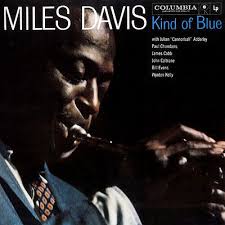 Miles’ music has much to do with this blog entry—I’ve studied for a long time and learned much from it, and one thing I’ve learned is how strongly drawn I am, as a listener, to an exceptionally smooth surface texture in music. Here, I strive to consider how my gravitation toward smooth surface texture in music has affected my listening, especially in light of a recent, shocking discovery.
Mark Gridley, a jazz educator writing about Miles, first helped me put this notion of “smooth texture” into words about fifteen years ago in a textbook, and I’m grateful to him for that because the concept of texture has helped me understand my listening experience in a more complex way ever since. Again, given that I’m not a musician I struggle to describe what I mean by “texture” in this brief essay. I know it’s a concept familiar to musically trained writers, as David Hurwitz uses it when discussing classical music, but I grasp in vain for words: Texture involves how the various tones fit together, especially across the entire frequency and dynamic range, in a complementary and synergistic way; how the surface of the music sounds in terms of richness and sonorous clarity; how dimensions of acoustic physics like echo, reverberation and decay audibly affect the quality of the notes; something like all of that, but something that also escapes all of those words and is more than them.
The clearest way I know to get at what I mean is naming specific records: Certain artists’ work sound distinct from records by other artists in their respective idioms because, above all, of their smooth texture. To my ears, definitive examples are Miles Davis; Radiohead (especially from OK Computer forward); symphonies by Shostakovich; the My Morning Jacket album The Waterfall; and the Yes albums from 1970-1976 that I have recently been exploring and adoring (I still find it hard, after a couple of weeks of diving in headfirst, to convince myself I just willingly wrote that phrase of approbation about freaking Yes; yikes).
 A description of “the opposite of smooth texture” would be just about anything in rock music other than Radiohead or Yes—the seedy–bar–band, rough groove that defines rock music (and R & B, its older sibling) as such tends to push against smoothness of texture, the wildness of the battering drums, growling bass, screaming guitars and shrieking vocals driving the sound in just the opposite direction. And that’s great as far as it goes, but one of the many ways that two acolytes of R & B and R & R, John and Paul, extended and transformed popular music is to partner with their jusitifably legendary producer, George Martin, to explore studio techniques that integrated classical elements and more precisely controlled sound qualities in their studio production efforts. This particular seedling in the forest of rock sprouted a grove of breathtaking, but much–maligned, pastoral foliage known sometimes as “art rock” and sometimes as “progressive rock.” For most of my teens, prog rock was just a weird subgenre that somehow seemed to circumscribe, according to writers, music I held dear (Rush), music I liked as well as anyone else with whom I shared musical interests in my local community of black–tee–shirted greasy–mullet boys (Pink Floyd), music I’d read about but never actually heard because it’s not played on American classic rock radio (Genesis; King Crimson); and music I found confusing because my Rush and PF friends liked it but it made my skin crawl (Yes). I listened to a bit of Jethro Tull back then too, though I would not have realized this band fit the prog rock label—they sounded quite far afield to me from Rush or Yes or Floyd. The Jethro Tull business illustrates what was still missing for me when it came to prog rock: I could suss out the “sci fi themes with lyrics about heady stuff other than drugs and strippers” and “complex song structures and musical passages” link among Rush and Pink Floyd and Yes, but that’s as much sense as I could make back then of what prog rock meant or why anyone ought to care.
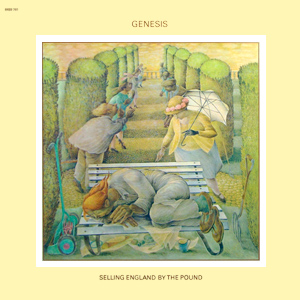 My knowledge of prog rock has significantly grown and developed as an adult, beginning when I fell in love with Selling England By The Pound in college while listening on the bed with headphones and a Walkman cassette player. My green Genesis 1970-1975 box now has a place among my three or four favorite single musical artifacts and shapes my listening paths as much as any art. A few months ago, casting about for something new to chew on in a deep, “awesome reissue package” way, I rediscovered Jethro Tull, came to appreciate this band on a much greater level, and came to understand how and why they fit the prog rock label even if Ian Anderson doesn’t agree—one of the enduring gifts given to me by my green–box–Genesis self education. Thank the musical gods for reissues!!! And speaking of reissues…
Perhaps the most exciting aspect of the Jethro Tull reissues—and it’s a high bar, given the handsome book–style packaging, the extensive liner notes, the oodles of images, the period concert films—is the gorgeous, immersive, evocative set of 5.1 remixes by Steven Wilson. I already knew and admired Wilson’s remix work because I love XTC, yet even his sparkling work with Drums and Wires, Skylarking, Oranges & Lemons and Nonesuch had not prepared me for how delicious the Tull remixes have sounded. I started exploring Wilson’s own music as a result, and it’s clear he’s someone who also orients to smooth surface textures—like me, like Miles Davis, like Jonny Greenwood. So it’s taken a decades–long burgeoning passion for prog rock combined with a fetish for reissues and a recent obsession with Steven Wilson to lead me to what was, only a few weeks ago, an unthinkable act for me: Checking into the fancy reissues, with Wilson 5.1 remixes, of the classic Yes catalogue.
Yes—yeccchhh!
And sure enough, they’re fantastic. I cannot get enough. I cannot stop listening.
This trend has traces all over my blog—R.E.M. used to be heinous, too, and before them Pearl Jam was heinous, and when I first went to college Prince was as heinous as heinous could get. I would respect anyone who finds my hyperbolic derision of any art a clear sign that I’m about to embrace and valorize that same art, sometime soon, but honestly I’m not planning to learn any lessons from this: I take pride in my passionate responses to art, and part and parcel of the passion for me is the pushing away. It makes any eventual embrace ever the sweeter.
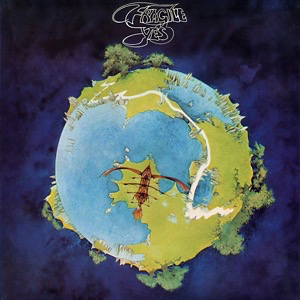
 Sweet—that’s how I am on Yes right now, sweet. You must understand, Jon Anderson’s voice is horrible for me. Well, even the Jon Anderson I heard when I was 15 and listening on 95 YNF near Tampa was never as bad as Jack White would later be, because nothing at all is as bad as hearing Jack White sing, but Jon Anderson’s singing was sufficient in and of itself to make my skin crawl. Add the obscure and bizarre lyrics (even though the lyric sheet in my spiffy new Bluray of Fragile insists that it’s “mountains” that come out of the sky and stand there, I’m still not convinced that’s what comes, even as I listen); those incredibly cheesy, electro–flatulant noises that Wakeman makes on synthesizers (though I’ve since learned much of what I ascribed to Wakeman is in fact Kaye or Moraz, I still blame Wakeman) and that sound like everything unlistenable about the second half of the 1970s all rolled into one keyboard tone (yes, Geddy, that means you, too); and the earworm–like nature of “Roundabout” in particular but the whole Yes ouevre in general, and I honestly as of my return from our Amtrak trip in mid–June would not have imagined a musical world in which I could possibly listen to Yes on purpose, much less have Burning Shed send me four albums in fancy reissue versions through UK Royal Mail. Quick. Before Amy could track what was happening, because then I’d have to explain to her that I was buying music and, still worse, that it was Yes.
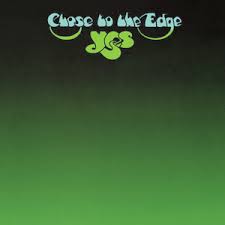 But I like to support Burning Shed, and I like 5.1 remixes by Steven Wilson, and I am curious about major prog rock acts whose work does not fit in my musical consciousness, and I sure do really really really like reissues—so in the mail they came. I bonded first with Close To the Edge and that’s probably still my favorite Yes record, at this “late” stage all two or three weeks into my Yes phase, but The Yes Album and Fragile and Relayer are all superb as well. Texture, texture, texture—wow. Nothing in even the pinnacle of Genesis, Selling England or Lamb, which is as purposeful and fussy as any other prog rock I know, even approaches the textural precision and smoothness on every one of these four Yes albums. The keyboard washes are astonishing in their abilty to melt together with Howe’s guitar to create a permeating, tonally complete and broad–ranging and smooth sound world, on track after track, and somehow this sound world, this glass–like texture persists no matter how hard Bruford/White and Squire groove—and the one thing I would’ve previosuly given Yes credit for, grudgingly, is that Squire and Bruford groove extremely hard (White does, too, but I didn’t know that before; I actually thought Bruford was always in Yes). How do they make a monster rhythm section attack somehow seamlessly weave into a texture that precise, that—holy hell is it the perfect album name—that fragile? Astonishing, I say again.
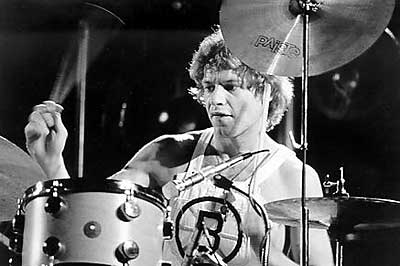 As for aptly named Yes albums, a major element of my rapidly swelling admiration for this band relates to my reissue–based improved understanding of their chronology. I would’ve assumed, a month ago, that “Roundabout” was a song from about 1973 or 1974 and that Yes’s period of expensive, gigantic, laser–lights–and–pompous–sets stadium touring in America was around 1976. But it turns out I’m three years off on those dates, which means that rather than Yes body–surfing in the wake of the prog rock movement initated by Genesis and King Crimson and “recently” popularized by Pink Floyd, as I had mistakenly thought, they were in fact Close To the Edge of prog rock innovation. Perhaps it’s strange to say, but knowing that makes me hear the music differently—more openly, with more reverence. When coupled with the way the textural brillance has overwhelmed me, this difference means that Wakeman and Howe, who I once held accountable for obfuscating and undermining the Bruford/Squire musical foundation, are now audible to me as positive, creative sonic forces. My reissues and online reading have also taught me that the most important force of all, the one driving all of the key artistic choices that made Yes who they became, was not Squire (as I had inferred) but Anderson. That’s enough to at least make me curious about the obscure and bizarre lyrics, and it’s enough to keep my ears open to his voice and its role within the texture.
But I’m never, ever going to intentionally listen to Jack White sing.
 Selling Dust
Luckily for you, both Yes touring bands — one with Anderson and Wakeman and Rabin, the other with Howe and White — will be touring our area in August. I’ve opted for the latter, because they’re dragging Palmer’s ELP tribute and Todd Rundgren along.
Woo Hoo! Sounds like fun—I look forward to your review.