
This is a quick one–off, a quirky new spin on my typical writing style in this space, in that way perhaps befitting the lefty–to–lefty perspective you and I share.
You are the one person most responsible for the weaving of the music of Bob Dylan into my life. That music has inspired a great deal of my writing, here and in scholarly spaces. It means so much to me that we shared together our book on his art.
Yet his art I have not yet made the subject of an entry in this space. Now, given our brief text exchange this morning, I’ll subject one small slice of that art to an accounting far too actuarial to be apt. For earlier, when you valiantly set about you with verbal vigor, vain as a Visigoth vowing that Street Legal sometimes surpasses Blood On the Tracks, daring describe the stark beauty of an album that lays bare urban and domestic strife after the dream has died as standing above another album’s strange and snarled sojourn through the lush thorns and berries of the corkscrewed–but–still–striving heart…well…I think we better talk this over.
So here goes the utterly impossible, invidious math applied to incendiary songcraft. Both albums, back to back, burnished in SACD gold, blasting as I write alone. I hereby tilt.
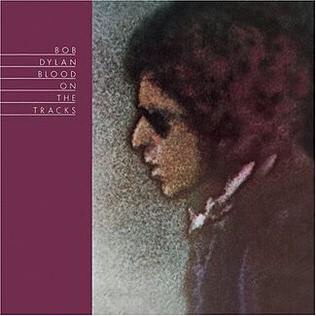
Blood On the Tracks
“Tangled Up in Blue”: How can a song so complex root so fully, so ready–to–mind, in my head even when not on the stereo? In yours and Matt’s as you exit venues, arms locked? How can a song thusly rooted in the whole cultural consciousness evade for decades, in its canonical rendition here at this album’s outset, the analysis we offered in our book of Bob’s muddled murmurings that are clearly grounded in earlier sketches cracking through his voice like he’s singing a palimpsest? Overdetermined? Definitely. Overcovered? Sometimes, by some. Overwrought in importance? No chance. 10/10
“Simple Twist of Fate”: There are so many things to love about this song that I swear I hear a new one every single time, in every single performance I spin, by Bob and by others, without fail. Right now, what emerges is the propulsive stride of the strumming against the prevaricating pull of his voice as it drifts off into an echo. 10/10
“You’re a Big Girl Now”: For me, the song that varies the most in how it reaches me across the several studio sketches in the More Blood box is this one. Perhaps the one way Street Legal has a mark above Blood on the Tracks is sequencing; SL is magnificently sequenced, enhancing its strength, while this song ought to have been placed after the next to keep it further from “Twist” and thereby make its lurching pleas more distinct in their contrast from those in the next track and further from the echoes in “Twist.” Still, as a song holding up to many readings, unassailable. 9/10
“Idiot Wind”: This is the one song, even more than “Gates of Eden” or “Desolation Row,” that would not let me Rest In Peace all those years between moving from Boston and moving back to Bob. Even more than those two towering spires of twisted haunting, this song haunts. Quite clearly, it sets out to haunt, narrator addressing despised lover as though she were a wraith until the clinching embrace in the final verse of the truth that narrator and lover are both ghosts unable to enflesh themselves into future forgiveness, even each of the own self. But given my quirky journey, my fourteen years of forgetting Bob, I am especially sensitive to how much the haunting succeeds. Though the slick–pated Professor Ricks had early on analyzed the “Grand Coulee Dam” verse so incisively and gracefully, still I couldn’t get free of its specter all those years onward in my still–hairy head. 10/10
“You’re Gonna Make Me Lonesome When You Go”: Brisk, funny, linguistically sparkling in a way that perfectly befits its wistful entanglement among remembrance, regret, and regirding, but still a bit light (perhaps mercifully) after what has come before. 8/10
“Meet Me In the Morning”: Charming, especially in how it is buoyed by one of Bob’s most astonishing vocal performances. Oddly, this is one I might play for the hard–hearing troll army that incessantly says, because he doesn’t sound like Donnie Osmond or whoever, that “Dylan can’t sing”—97% of the musical weight of this song is carried by how it is sung here on this recording. Yet the sequencing again lets us down a bit; this one, the lightest song on the album, should not be pinned between two other songs whose very lightness is so essential to the wry and revealing humor on which they greatly depend. 6/10
“Lily, Rosemary and the Jack of Hearts”: Just as “Idiot Wind” haunted me for those 14 years in the Bob–light wilderness, this one was the unsolved puzzle that kept my mind grabbing for meaning during that time. In this, it succeeds, as I view its Roshomonesque perspectivism, even more than “Tangled Up in Blue,” as teaching us that stories take their meaning from the ephemerality of the telling rather than the reification of the having been told. This song did me the great service, through this teaching, of helping me hear the song that is my precious Dylan wooby, “Black Diamond Bay,” and its marvelous summarizing last verse, as I now hear them. But I still don’t think anyone, least of all the narrator, has any clue what actually happened to Jack, Big Jim, or any of the others in this song. I’ll also note that my favorite example of Dylan’s extraordinary ability to sketch vividly in few words is in this song: “With his bodyguards and silver cane and every hair in place…he took whatever he wanted to and he laid it all to waste.” That character and every way he impacts those around him is conveyed in greater depth in those two lines than some novels do in hundreds of pages. 8/10
“If You See Her, Say Hello”: This one is the hardest one on this album for me to grip firmly. I think this is to its credit. It also significantly changed over the evolving Blood sessions, and it landed here in a bed of chiming guitars and clip–clopping rhythm that is saved from the saccharine by another wrenching vocal. Does this narrator ache? Does he rage? Does he yearn for recognition? For reconciliation? The music and vocal work together to leave all those readings on the table, and that’s impressive. 8/10
“Shelter from the Storm”: The astonishing thing to me about this eerie, apocalyptic love letter is that it sits snugly on this album, no more distinguished than most others and perhaps less distinguished than some—and if any artist, any other artist at all, had recorded this, that artist could have built an entire career on its foundation. 9/10
“Buckets of Rain”: Fun wordplay, fun vocal sound. Finally, a triumph for sequencing, as this one assuredly fits as the closer. 6/10
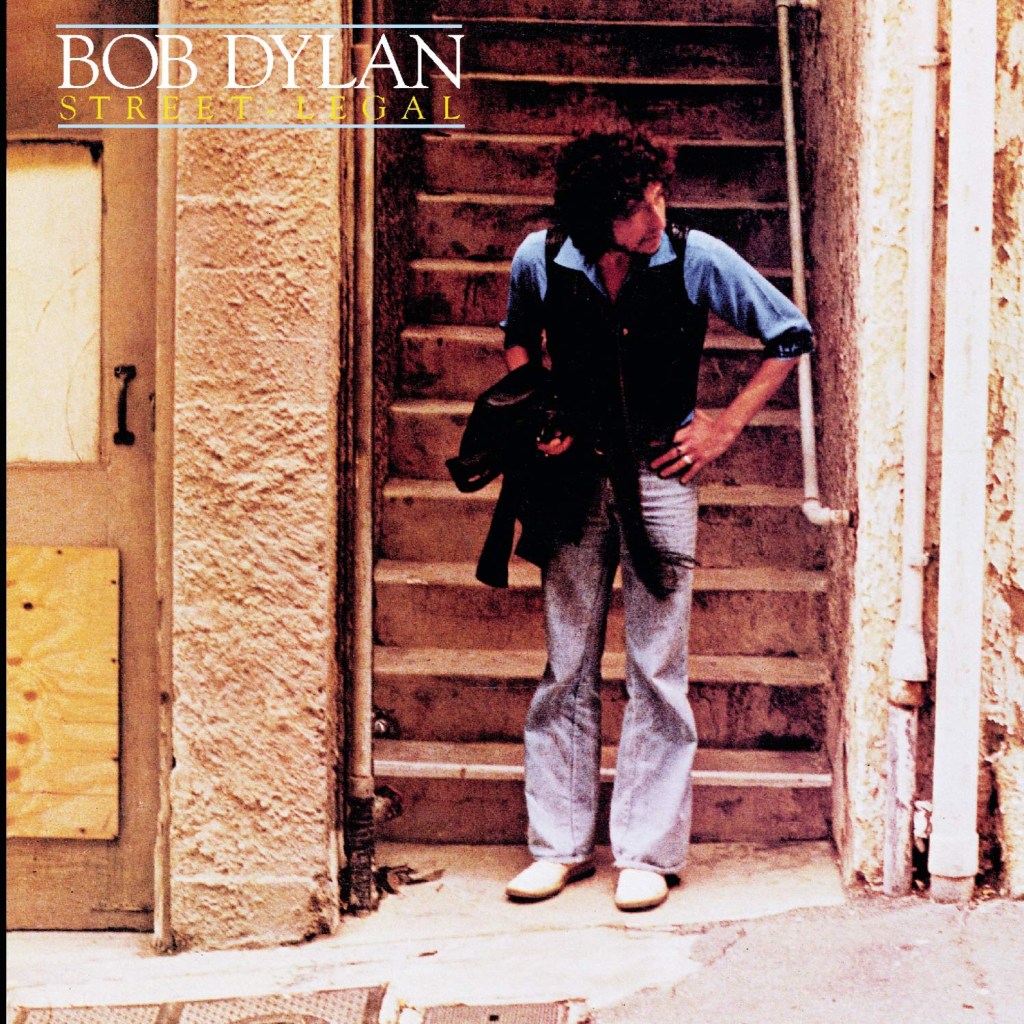
Street Legal
“Changing of the Guards”: Another song it’s fun to puzzle out in terms of meaning, biography, and so on. Rewarding lyrics, but the musical simplicity and sameness let me down just a bit here—I like the cheesy horns in the turnarounds, and the gospel singers here (and throughout this album) are a big asset, but I don’t hear any musical touches that foment interplay with Bob’s vocal performance; it just sounds like a tightly made musical bed underneath, to my ears. 7/10
“New Pony”: This song was among the biggest revelations for me when I first set upon listening closely and repeatedly to the album. Very naughty, very persuasive, just crunchily bitter bawdiness in the most delightful way. 9/10
“No Time To Think”: Another revelation for me. I really dig the vibe, the carousel feeling as the narrator sweeps around and around, setting his gaze on the wasteland around him and trying with neither reason nor rest to hold his identity together. In this case, the musical simplicity and repetitiveness fit the vibe and tug against some vocal and lyrical passages in more rewarding ways, for me, than the opening track. 9/10
“Baby Stop Crying”: I suspect this may be one track where you and I will find wide divergence. It’s just awful, to my ears. Its only redeeming qualities lie in a few clever turns of phrase and in the gospel–singers–and–horns sonic palette, and to me the presence of the latter in this truly irrelevant song merely cheapen their worth in the other songs. It’s not just that this is vastly, vastly worse than any song on Blood on the Tracks. Almost every song on Saved or Shot of Love is less likely to warrant the “skip” button from me than this song. 2/10, generously
“Is Your Love in Vain?”: The other one. As I said, I think sequencing is a strength for Street Legal, and one dimension of that strength is that these two duds can be ignored one after the other. At least the previous track had better lyrics and less whining, and the organ blends with the whining in extremely unhelpful ways here. “Can you cook and sew? Make flowers grow? Do you understand my pain?” My dear Bobcat brother, this song is a freaking atrocity, politically and artistically, and almost entirely by itself makes comparing these two albums ludicrous. 0/10
“Señor (Tales of Yankee Power)”: Perhaps the most astonishing, breathtaking artistic recovery from one track to the next on any album I have ever heard is this one here, coming off the previous track. Someone said to Bob, “You have written “Gates of Eden” and “Desolation Row” and “(Stuck Inside of Mobile with the) Memphis Blues Again.” Songs like these make efforts like “Eve of Destruction” almost laughable by comparison. You have clearly turned your talents to the more personal blasted–out–wastelands of “Idiot Wind” and “Shelter from the Storm” these days. Plus your future acolyte Keith will at some point have heard Shostakovich. Are you irrelevant moving forward, apocalyptically speaking, as an artist?” And Bob said, “Hold my whiskey” and wrote this juggernaut. 10/10
“True Love Tends to Forget”: One reason I feel prepared to stand behind my responses to the two tracks I dismissed above is that as I examine the question, “Is it just the idiom, Keith, the whining and the organ and the cheesy emotional landscape and the overwrought sentiment and the teenage–poet rhyme choices that prevent you from recognizing musical merit?”, I comfort myself with the fact that I dig this track. It’s fun. 7/10
“We Better Talk This Over”: Another exercise in snappy, wry fun, a tightly constructed cavort through relational detritus, and wonderfully so, the best such effort on this album. 9/10
“Where Are You Tonight? (Journey Through Dark Heat)”: An optimal closer for this album. It feels like a summary of everything we’ve heard and thereby enriches all of the rest through its weird, wondering warbling. A few sketchy lyrical choices fit that album–retrospection, so I forgive them. 10/10, as much for its role on the album as its individual merit.
In sum, as if that were a reasonable way to approach this, I give Blood on the Tracks 84 total points and Street Legal 63, suggesting that the former is 133% as good as the latter. Again, math is not the right fit for this problem; that said, I don’t think “33% better” is an unfair claim. I eagerly await your rejoinder.
 Selling Dust
Well, my friend, lefty-to-lefty, this was quite a challenge. There’s no chance that I’ll rise to the level of erudition in your opening salvo, and I can’t believe you poured that out in a day, while I’ve spent the week ruminating and still don’t have the handle on the material I would like. To top it off, we’re neither of us math wizards. It seems to me that, by your own math, you would rate BOTT at 76, not 84, so Street Legal isn’t so far off as you might have thought. But I don’t think adding up points quite works, especially since Street Legal comes up a song short, and so never had a chance.
Anyhow, this kind of debate is ultimately unwinnable, so here’s my methodology in this week-late retort: instead of using an additive process, I took your 0-10 scale, applied it as you did to each song, and then came up with an average. That’s still absurd: my method leaves Blood on the Tracks with a score of 85, a solid B, and Street Legal with an 82 (so you do win) or a B-. But anyone who said these are unremarkably passing albums wouldn’t deserve to listen to “Handle With Care,” let alone comment on the Rocks of Gibraltar that these two collections represent. As Atticus Finch says, I was licked before I even began, but nevertheless, with apologies to Mr. Sherer because I was never able to listen to, let alone write about, John Prine, I’ll sally forth.
The fundamental difference between these two post-breakout albums is that, while Blood on the Tracks is the raw, shattered-spine introspective paralysis of the recent collapse, Street Legal is more like the incipient restitching of a life when someone knows there is a way to move forward, but is still unclear of what that direction is: “The stitches still mending ’neath the heart-shaped tattoo.” They’re two necessary sides to the same coin.
Let us go and make our visit.
“Tangled Up in Blue”: There’s nothing to say here. It’s perfect, and everyone knows that. 10/10.
“Simple Twist of Fate”: Again, there’s no point in wasting time here. Let’s get to the good stuff. 10/10
“You’re a Big Girl Now”: The song anticipates the irony of “Most of the Time” and has the brilliantly sad delivery of “I know where I can find you, in somebody’s room,” but ultimately, it doesn’t feel like it goes anywhere for me. Maybe it’s as you say, and too close to “Simple Twist,” but it sounds like filler to me, and I think the outtake “Up To Me,” several versions of which are brilliant performances, could have stood in its stead. 7/10
“Idiot Wind”: This is a monumental song. The live version on Hard Rain redeems that entire album. It’s the centerpiece of this one. At the time of its release, had I been sentient, I would have given it a solid ten. But alas, we have the benefit of hindsight (hindhearing?) and know that superior versions, both in lyric and music, were left behind. Yes, this is excellent, in the same fashion that he gave us an ok “When the Night Comes Falling From the Sky” with cheesy 80s synth. But the fact that all three other performances soared, not least the version released on Bootlegs 1-3 with the E Street Band, is unforgivable. He needs must lose a point for that switcheroo. 9/10
“You’re Gonna Make Me Lonesome When You Go”: There was a month or so in the spring of 1992 when Bob was unbearable to me. One night, on some NYC radio station, I heard Shawn Colvin weep through a live version of this. I called the station to find out what the album was, a compilation disc that was out of print, and hunted it down. Even Bob can’t sing it so well, but I think of her every time I hear it. It’s a moment of brightness on a dark album, and so I give it an 8/10.
“Meet Me in the Morning”: A good tune, and entirely appositive to “Call Letter Blues,” its musical twin. He could have switched the two and I’d never have noticed, and sometimes I forget which is here. A passable blues but nothing to write home (or you) about. 6/10
“Lily, Rosemary, and the Jack of Hearts”: Christopher Ricks rightly points out that the outtake with the extra verse is the inferior version of this tremendous tune. It also was the first text that inspired me to voice my own opinion against his colossal intellect, and when I told him I’d snuck that into the book, he said, “Opposition is friendship.” Gutting. 10/10
“If You See Her, Say Hello” is an excellent song, full of mixed emotions, and a lovely guitar. Listening to it is like swimming in warm water. It’s not an anchor to the album, but it’s beautiful. 8/10
“Shelter From the Storm”: For imagery and performance, this can’t be beat. Maybe the outtake, used later on the Jerry Maguire soundtrack, has better music, but this is the real deal. 10/10
“Buckets of Rain”: Bob has a habit of ending on an apocalyptic note, so why he appended this after “Shelter” so perfectly closed out the album (and again, in favor of “Up to Me”?) makes no sense to me. I suppose I should hold the duet with Bette Midler where they turned it into disco against him, but I kinda do. It does have a good guitar performance, though, so I’ll give it 7/10.
By my count, that makes for an average of 8.5 for each of the songs.
Now, on to the explosive quest that is Street Legal. Someday I’d like to really sit down and wrestle with this, but here’s a precis. Alas, even though I’m trying to convince you, I’m not firing on all cylinders this week, so here goes:
“Changing of the Guard”: From the opening riff, through the timeless imagery ranging from Apollo through the 19th century and beyond, this labyrinth signals a lurch forward with vigor and verve. It doesn’t fully add up, but, like “Tell Me, Momma,” its power is in the inchoate emotion, not its full development. 9/10
“New Pony”” The sexually-charged imagery mixed with voodoo (“I seen your feet walk by themselves” sounds like something out of Angel Heart) and the blues riff is exciting and not your usual 70s fare. For sheer bravado, I give it 8/10.
“No Time to Think”: I love the horns in this, and the rhymes are astounding: “stripped of all virtue as you crawl through the dirt, you…” is brilliant, but not so brilliant as “I’ve seen all these decoys through a set of deep turquoise eyes,” where he needs to gulp to finish the line, and retain the internal rhyme. Damn. 9/10
“Baby, Stop Crying”: You’re right, this is a song for us to tangle on. No, it’s not a brilliant song, and the emotions are mixed. here’s a man who wants to move on, and the woman who left him seems to have second thoughts herself. What to do? He’s torn, and the see-saw motion of the music conveys that. The call and response of the “Stop cryin’” between him and the gospel sings tosses him on the waves like a cork, and there’s no shore in sight. there’s no motion forward, but at least he knows he needs to move, with or without her. 7/10
“Is Your Love in Vain”: “I’ve been burned before” says it all. The same narrator from “Stop Crying” has had his resistance shattered. Maybe it is ok to go backwards. There were good times in the past, surely? So if she can just give me this one thing, maybe it’ll fix the old mistak…No, no, that way lies madness. The deep, rumbling organ sound of the opening line mirrors the pounding heart of someone who knows he shouldn’t give in to temptation, but also knows he already has. You’re right in saying these two songs go together, but duds? No, son. We’ve all been here before, and we can’t skip this, nohow. 7/10
“Señor (Tales of Yankee Power)”: this is the song that continues to confound me. Yes, it’s a good song, yes it has strains of Peckinpah and luminous images. The music is great. But what’s it doing here? It should be on Desire, sandwiched between “Joey” and “Romance in Durango.” Maybe that’s where it’s from. But sonically, emotionally, lyrically, it doesn’t fit here, and so I can’t follow you into the flights of wonder and “Gates of Eden” comparisons. I like it more than I used to, but it’s not part of the movement here. 8/10
“True Love Tends to Forget”: No we’ve got it together, we’re back on the track. I’m glad you like this, Keith, but it’s more than just fun. Look at just one stanza: “I was lyin’ down in the reeds without any oxygen / I saw you in the wilderness among the men / Saw you drift into infinity and come back again.” The sheer sense of movement (“into infinity AND back again”? It’s the ultimate journey, surely—she’s come back from the dead, a goddess). Hero tales always get me right here, so this song is more than just fun. It’s a critical stage on this journey of redemption, this comeback from the weekend in hell. 8/10
“We Better Talk this Over”: The slyness of the guitar in this makes my hair stand on end. The cascading rhymes, taking us over one waterfall after another, are dizzying. The multiplicity of meanings and connotations in the couplet “The vows that we kept are now broken and swept
’Neath the bed where we slept” could fill a chapter that I now desperately want to write. This song is full of strange hope, yet hope nonetheless. and is that tangled rope an allusion to a previous tangling? One can only hope. 9/10
“Where Are You Tonight? (Journey Through Dark Heat)”: The stacking of images, one “there’s a” after another could have become annoying, but there’s a middle passage that he navigates perfectly here. The way he makes “bell tone” sound like “bell tolling” and still have it rhyme on “stone” is a trick that gets me every time. I don’t know what it means, but Marcel and St’ John certainly prefigure the men who share his code in “Ain’t Talkin’ .” There’s a pounding, sinister need to keep moving here, following that train. The stripper and her book that no one can write, the one with back pages is another lurch forward from the topless bar in “Tangled” and beyond. He’s found the exit from this purgatory, and he’s ready to leave. By the end, he’s arrived, he’s survived. This is one of the best album closers he ever put down. Oh, and a certain someone I know got the title from his recent novel from this song, I think. Full marks! 10/10
Whew. Not my best effort, but I’m rechecking my math, and get 8.3 Just shy of Blood on the Tracks’s 8.5, but a full B. Of course, those Bs are BS, unless we just shift them both into the category of masterpiece vs. masterpieces, which they certainly are.
Ok, buddy-ro. How you like them apples (with the juice running down…)
Marvelous! “Opposition is friendship” indeed…the Professor always makes “it’s right” out of “it might,” and you carry that weight here. Let’s write more!
Smoke ‘em! 🤣🤣🤣🤣🤣