
Spoilers here are effectively in every phrase, at least if I have done anything right; please see The Fabelmans before reading
Punctures in the film’s surface…that’s how the boy makes gunshots that fire light. A brilliant insight. Reworking materials. Taking hold of what we’re made of and making something from it that burns outward, that catches others’ breath—art as Golem, art as totem, art as artifact made living.
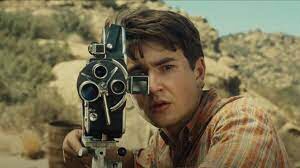
Like your namesake, you prophesy. Prophesy redoubles, turning doubt into belief by prolepsis, by seizing what will come and wrestling it into right now. You shed light on double identity, you take others’ words and rework them to illuminate how history and culture twin in the personal and turn toward what might be. I’m Jewish, but I’m not. I’m like Sam Fabelman, but he’s as unreal as his name, he’s neither Spielberg nor Kushner but twins them both. The Fabelmans studies Jewish-American identity like you do, but the film’s never focused on that at any point. It tells a boy’s coming-of-age story we have heard far too many times (Amy highlighted afterward that it fails the Bechdel test), and it hits me like nothing I have seen before.
Like in your work, in The Fabelmans the work is in the words, the words not of authors but of others. The film belongs neither to Spielberg nor Kushner but both in perfect balance between words and images and still not merely to them but to the ensemble in the act of creation (you can feel in this film the notoriously hypercontrolling Kurosawa’s claim that if he knew how the film would come out he wouldn’t have to make it; he’s another prophet, it seems). Drama emerges in scene after scene, held in sparkling tension by angelic writing and by the extraordinary balanced-on-the-razor’s-edge cinematic performances of Williams and Dano, whom we inherit as actors already at the pinnacle of the art, and even in his quiet way Rogen.
Rogen takes up the materials he carries with him always, his confident yet awkward physical clowning and his self-deprecating yet cynical wit, and creates a compelling beast who loves and is loved by chosen family yet remains trapped within his culture of achievement and status and its inability to name the beauty of gentle, relational support for others, its grave inability to name homoerotic or polyamorous feeling. Talk about identifying with a character—ahem.
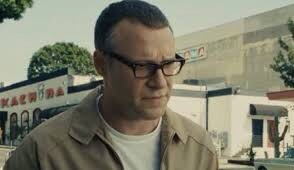
And if Rogen molds for us a beast trapped in a historic and cultural prison that distorts a raging effort to create and shout out an identity, his is but a minor monster next to the simultaneously exhilarating and terrifying Williams. Every scene without fail captures a skosh of smoldering resentment of concerts never performed that never once grows out of proportion to her earnest and clumsy and charming efforts to live a matronly myth or to her ceaseless and heartfelt fawning for family—so that in the moments when her fury erupts or her madness smothers her, we’re both completely prepared for it and completely surprised. Razor’s edge, rapture, rapt. And as inspirations of casting go…have you seen Take This Waltz, by Sarah Polley (speaking of fostering feminist filmmakers who show us some other kinds of stories)? This casting director clearly had, because of all the stout, dopey, clowny-but-smart Jewish fellows in cinema, and there are plenty, how to find one who has established sparkling cinematic chemistry with Williams, absolutely necessary for this story given the subtle tracing of their silhouetted love for one another in the shadow of the equally strong and utterly central and centered, yet different, love between Williams and Dano? Rogen is the shining answer.
Dano, too, molds his hard-won materials as Avatar of Understatement into the dedicated nuclear family provider who cannot see the chaos exploding around him but never fails to show us, onscreen, how he sees it too, how he can’t not see it. Those eyes, Dano’s extraordinary eyes, their magic like the magic of Williams’ eyes, their eyes redoubling the big screen’s ultimate encapsulation of the looked-at, the gigantic face as large as life, his eyes and her eyes always reflecting back to us in every shot that they are not merely looked upon but that they also look. Cinema become twinema, self-consciousness sewn into the most self-conscious of art forms.
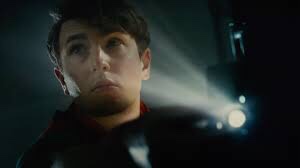
And this is why the particular story of a Jewish-American baby boomer is optimal optics for telling once again the story of cinema. You understand this, as you showed in your book: The lens of one person’s complex and interwoven, yet still highly particular, identities allows us to see how, exactly, we create something real out of something imaginary. How we create common ground out of the histories that divide us, most of all against ourselves. How we create community out of isolation. How we come together with strangers in a cavernous, dark auditorium to be bedazzled by flickering light. That’s what fires Sam Fabelman’s imagination, and as I have described many times in this blog space, my favorite artworks are self-conscious, formal-and-not-just-narrative artworks, each one telling the story of its own creation through the structure of a particular art form. Like your book does. I didn’t think it would be possible, after so many exposures to fare like Cinema Paradiso and Inglorious Basterds and The Artist and Hugo, each of which I love, for me to be enraptured again by cinema striving to show us why cinema. And candidly, though I think Speilberg’s films’ excellence can rarely be assailed, I’ve long been skeptical of what I’ve gleaned of his aesthetic philosophy. Not after this film. As much as not only any Spielberg film but any film, full stop, I feel that this film does what great cinema is supposed to do.
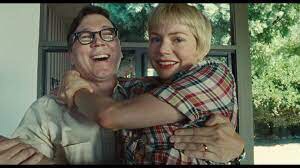
Its most memorable two minutes, for me, are wordless, Sam’s filmic documentation of his family’s move to their opulent, newly built California home where each of the four kids will finally have their own bedroom. It is a synecdoche for the entire Jewish-American baby boomer dream, a return to Eden. They silently frolic, flitting from room to room, kids romping and Williams and Dano dancing. Yet we know that the fissures under the family’s revelry are barely suppressed now, the reach for greater prosperity balancing the pressure about to quake the family into devastated pieces at any moment. And Williams and Dano, as compelling a pair of film actors as I have seen in my lifetime, get in this scene to be mimes, playing this dance of desperate delight in their bodies and faces. They get to dance along the thinnest beam lighting their push forward. That’s what great cinema is supposed to do.
 Selling Dust