
The most beautiful moment in life is this moment.
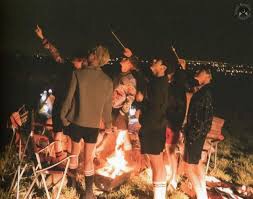
This moment is not merely this moment. This moment is already the most recent moment, at the apex of memory with all moments dancing behind it. This moment is already the very next moment, holding us together with every possibility.
You and I have been held together by the Saluki dance. Dewey’s ghost there first taught me how this moment is all moments, but his style, tangled and tedious and turgid, didn’t reflect it like Namjoon’s. I fell into that southern delta—what a trip it’s been. I never know why I end up anywhere, certainly not why there. But now I’m here, in this moment. Now you and I are held together by a far denser echo than the Little Grand Canyon forest, held by a coiling spring of sound waves pulsing mightily through the air and making us bulletproof.
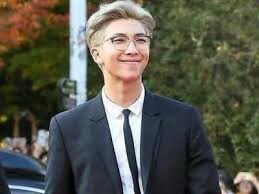
BulletProof. We’re pierced by this art, broken open, because it’s the ultimate art of the Sensation. We’re tempered by this art, cleansed and healed, because it’s also the art of Sociality.
I’ve been born into and raised up in a popular culture discourse that cuts down and buries its deep roots in the Sensation. The Sensation’s trivialized, stately elaboration elevated. I’ve done it incessantly. Someone who you and I love like a sibling tucks “She Loves You” safely into a dusty shoebox in order to separately polish and display psychedelic and fussy conceptual dreamscapes. Yet Ellington’s orchestral shocks thrill and wail in my ears still, despite being hallowed and ensconced. I’m as in love with “she was just seventeen” as I am with “when I’m sixty-four” if I listen with my heart. And in this music from this contemporary collection of raffish, homoerotically interlocking young charismatics, ineradicable hooks are again everywhere. Everywhere. They dig in, they scar the aural sinews—so that feeling them enlivened, heated and heaving, by the return of rhythms and melodies no longer outside but now a part of the performing body, is all that’s sensible. Sensation and sense gathered together. The Sensation catalyzes the most beautiful moment in life, always this moment, and the moment catches fire and flows from dancing grace to exhilarating possibility.

I’ve chased many possibilities in my audience life, but never dance before now. Now, in this moment, choreographic wonders cascade—glittering fractal motion bursting from concerts, promo vids, practice sessions. I can’t stop. Nothing makes more sense than this magnetic pull, than watching this troupe make motion pictures, apertures relaxing and tightening as the music becomes a vision. Nothing makes more sense because the Sensation is all aperture, a series of snapshots, focusing and framing. This music mirrors the rhythms of the camera, in both sonic foundation and vocal stylings—it braids panoramically scanning ballads and broad melodies with tight, precise beats and propulsive raps. The most beautiful moment in life.
I wrote in another space (stay tuned! I’ll send you a copy!) that Taylor Swift alchemizes form and content perfectly in aestheticizing evolving identity through the optimal art of the adolescent-teen-young-adult growing into a listener self. As perfectly, assuredly, Bangtan Boys alchemize form and content in aestheticizing the Sensation, in framing again and again the unique energy of the moment, catching the vein of momentum that’s always been the heart of photography, of phonography, of Pop Art itself. The Sensation confronts, activates every nerve with superlative short-song structure, moves through the dance, celebrates self-beholding in stunning photo books without which I cannot imagine how I might focus on this art as richly.

My peculiar audience perspective points up the Sensation especially, as the stately elaboration of the fluent predicate is impossible for me. I hear fizzles of English phrases, teasing rich meaning that I must otherwise glean from doing my homework—at least until my ears are blown out by dynamite and balmed by butter. Despite the clue of my love for opera, in pop I’ve forever wondered how fans in non-English-speaking spaces have so fervently followed acts singing exclusively in English. From this moment on, I’ll wonder no more. Singing becomes pure sound when it confronts my Korean-poor sensibility—and pure sound, shaped by the braid of panorama and propulsion, becomes pure Sensation. The most beautiful.
Talking with you is the most dedicated way I do my homework. I prefer it to my occasional dives into online holes of lapine discourse among adorable young reps more anonymous than you. That’s sensible for me because I engage art relationally, always. Weeks ago I started saying to others, and of course mostly to myself because I know myself, cypher or not, this: When I buy a BTS package and devote more shelf to this art, I choose gladly to spend money and space because it’s like getting a drink with N. It spurs and supports conversation and connection.
That’s why I see so much of A Hard Day’s Night in the Hwayangyeonhwa video series—and I can offer no higher compliment. In both, the intense feeling and overwhelming pace of young life and careening futurity is survivable when it’s shared. Artists seeing oneself in another and another in oneself and holding the anchor of art by hewing to that human through line—that’s what inspires me. The Art of Sociality.
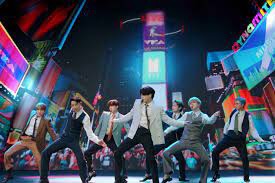
It’s what inspires this blog, why it’s a least a tiny bit more than just a journal. It’s why Amy’s direction to address entries to a specific someone has made so much difference for me. So, thanks for sharing this art with me. So many words are emptied of the meaning of moments past when overapplied in an effort to address this moment. I’ll try not to do that now in my hwayangyeonhwa epilogue, try instead to embrace the dance of meaning of its past with the possibilities it still holds when I take up this one English word and claim, for this Korean art: It is Sensational.
 Selling Dust