
Overture
Art as apprehension. Scary though it is, through art we take up and make up the world. Creating our selves is aesthetic work, conceptual forging, chaotic and partial and always poised in the processual moment, never right but always reaching. That’s what Amy teaches about art as apprehension.
I tried to take up this idea to talk through Taylor’s work, art as apprehension in a whole book unto myself—but I tried to not make it wholly unto myself through listening as carefully as I could to others’ voices. Your voice was among those, and now I’ll try to take up a new voice to tell a tale to you because I’ve never written this story. I’ve told it aloud many times, even once on stage where I oughtn’t have been allowed. Now, I’ll do something scary. This story that’s so close to me, so close to who I am, so close to the self I strive to be, I’ll tell it a different way, and that choice will change me.
First Movement
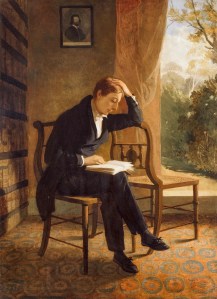
A tiny New York City apartment, at perhaps 2:30 a.m., February 1992. I’ve been living here for just a couple of weeks, a rent-controlled shotgun-style space on 30th street, just east of Third Avenue. I won’t learn until years after that this apartment shared a wall with the Columbia studio where two of my great musical heroes, Miles Davis and Bob Dylan, each routinely recorded in the 60s—a shared wall with history! My bestie Cal secured this spot, evidence of how effectively he accesses systems and finds clever ways to make them function favorably rather than only unfavorably. He invited me to move in here because I just finished undergrad coursework—no, more precisely he figured out on my behalf that I have finished undergrad coursework if I properly count the units, halfway through my “senior year”—further evidence of how cleverly he accesses systems—and, informing me of that, asked me to leave school and join him here. Two single guys at the start of our 20s with a ridiculously affordable Manhattan space, the City surrounding us—come on, come on, a little taste of heaven, right, even though Tay is barely a year old at this moment? Alas, unemployment is right now making it taste like hell. Cal and I are both up all night as usual, debauched but detached, nothing right, forever reaching. This particular long overnight, as I despair not just for a job but for a vocational purpose, Cal’s insisting that I must choose that purpose for myself, create that vocation. How, I wonder? I want to teach college…but credentialing pushes that plan years into a chaotic future. He suggests starting right now, in the dead of night—teach me something, he insists. Right now. I reflect briefly and go for a lecture on poetics, here on the spot for Cal in our living room. Without internet, with very few books, I have to build my analysis on a short poem I can recite accurately from memory on the spur of the moment—fumbling for a future professorial self that I’m now living as we near 2025, in 1992 I’m pulling on an invisible string tying me to me, somehow finding the words to teach. In that moment, on that sudden makeshift imaginary podium, I speak this, by Keats:
This living hand, now warm and capable
Of earnest grasping, would, if it were cold
And in the icy silence of the tomb,
So haunt thy days and chill thy dreaming nights
That thou wouldst wish thine own heart dry of blood
So that in my veins, red life might stream again,
And thou be conscience-calmed—see, here it is—
I told it towards you
Second Movement
The same apartment, a little more than half a year later, in an earlier-evening conversation within our more reasonable-lifestyle rhythms because now I work and must actually go to bed. Cal’s just attended his first day of a Film and Literature course in his major program, and he’s definitely not looking forward to the second half of that course title—novels to read, and thematic papers to write, on Faulkner and Camus and so forth. He and I are hashing out his long-standing frustration and disappointment with school—he’s a spectacular learner, but not sanguine about schooling structures. Ahhh, his clever working of those systems, though. We hatch a plan here this evening, a plan furthering my reaching toward an academic future not yet realized and, in the bargain, slipping him from the shackles of the essays yet to come: We’ll watch the films together at home, and I’ll write his papers. I promise to read the novels, or at least the Cliff’s Notes, when necessary—but it will never be necessary. I will never read even one of the novels. The professor in this class will make me feel proud of my work, will write glowing feedback in the margins and at the ends of each and every one of my papers—I mean, Cal’s papers. He will seek Cal out after class meetings, chat him up, delighted to share ideas with him. He’ll be swept into our Scholarly Cyrano Scheme and never be the wiser. And here’s where the invisible string ties me not just to me, and not just to Cal seamlessly speaking in his/my voice after class one-to-one with aplomb, and tying me not just to this professor I never meet face to face but only know through a series of conversations essayist-to-snowed-reader on the page—the invisible string ties me to you. The last paper I will write for Cal in our scheme will be on Lady Chatterley’s Lover, a book I have still never read as we near 2025 but that I have now watched in two film versions, the second on your recommendation today. And the Lover (heh heh, I keep sneaking them in) paper will be a culmination at the end of Cal’s—I mean, my—Film and Literature course. It will build gradually on earnest, gushing intercourse between writer and writer, from paper to feedback, for months, ecstatically climaxing with that Lover essay. None of these moments of verbal congress will ever mention John Keats, nor even poetry in any save the vaguest sense. Until the Lover paper. The semester over, Cal’s Lawrence submission returned to him and then to me, I will eagerly devour the comments in the margins and at the end, the remarks lengthy enough that they will spill down the smooth backside of the final sheet. And there, as his last words, my never-met ghostly interlocutor will have written in his own hand—the entire poem:
This living hand, now warm and capable
Of earnest grasping, would, if it were cold
And in the icy silence of the tomb,
So haunt thy days and chill thy dreaming nights
That thou wouldst wish thine own heart dry of blood
So that in my veins, red life might stream again,
And thou be conscience-calmed—see, here it is—
I told it towards you.
Third Movement
The Kleinau stage, July 1999. I’m moving more meaningfully than ever into the future now, having just finished my first year of grad school. One way I felt my way forward was two and a half years before, living in Orlando, when I answered the phone and learned that the grad director at SIU was calling for Amy, an applicant. She wasn’t home; I offered to take a message. And you know Ron, and you know me, and so you won’t be surprised that instead of just jotting down a note I talked to him for like 25 minutes, some random answerer tied to my future grad director down the then-still-physical phone lines. Tonight, he’s in the audience for this SIREA benefit performance series, and I have decided that the astonishing, inexplicable string of thrumming synchronic vibrations I’ve pulled taut across those first two movements is too good, too bone-tinglingly magical and reason-defying, not to thread through a solo spot on the SIREA slate here. A tale too tantalizing to not tell. Afterward, communing in the Kleinau church as we do, as you no doubt remember well in your body, hands clasping hands, backs warmly patted or enfolded in hugs, I glad-hand Ron cavalierly, counting on praise for my energetic whopper onstage. And I’m caught. He’s smiling that half-smile you can picture now, the one that always catches us. He reminds me, with his arch New Orleans drawl, that I’m an active graduate student who just publicly admitted to repeated, deliberate academic dishonesty. I can feel my blood temperature drop in this moment. I can feel the thread to my future self thinning. What I don’t yet know is that I’ll hang on, even as it thickens again and thins again, undulating toward the now, an invisible string that in two years will tie you to me, and your dear friend Tony, and through Tony looping in Marcy who I knew first, right away at SIU and then distantly across a continent and then thickening again when she would join me as my colleague at Stan State—where she would, though she would latterly come to disagree with Ron about so many things, where she would echo his scorn at academic dishonesty, where she would call for me and all of us to hold that line as an absolute precondition to learning. And I will look back as we near 2025 at the self that snarled and severed that line and feel shame folding into pride, shame indistinguishable from pride. Vertiginous and lurching, I’ll look for myself not in a mirror of glass but in a poem reflected yes, like a ghostly echo, down the vacuum of time and try through this poem to lovingly embrace all parts of who I have been and will be:
This living hand, now warm and capable
Of earnest grasping, would, if it were cold
And in the icy silence of the tomb,
So haunt thy days and chill thy dreaming nights
That thou wouldst wish thine own heart dry of blood
So that in my veins, red life might stream again,
And thou be conscience-calmed—see, here it is—
I told it towards you.
Coda
I seek relational bonds. I hunt for them. I ache for them. I aim for connection, for the heart, I go for blood, and when I miss I feel it in my bones. The best first date I have had in my life is with Amy, and I never really had a proper “first date” with either Susan or Molly, but the next best first date I have had is with a former poetry scholar now turned grief counselor in a tea room in Berkeley this past August. All we did was have tea and talk, but what made it special was how much I liked her. We had a very brief romance, not right away but after a series of fitful starts, and that’s over and now we are striving to remain friends. But I liked her so much. I felt it in my bones. And I felt it partly because the poem found me, incredibly, yet again. That first date, in that tea room, as the talk turned to poetry and grief, all I did was mention Keats’ name—no other hints, no other clues—and she began to recite, “This living hand, now warm…”. It’s just a set of words, words put on a page centuries ago by a famous odeist and romantic. But again and again this set of words has sewn itself into the very tissues of my body, my consciousness, my apprehension of all. It’s all the way in me, and I am who I am all the way within it. I hold it…
 Selling Dust