
I’ve spent time this current holiday updating this site, so that it now looks a wee bit like a “site” and less of a bit like “some junk drawer where some guy puts blog entries.” One result of my updating is a pair of mind maps (under the menu link Interstices) that suggest linkages among albums that have shaped my musical thinking and films that have shaped my cinematic thinking. And they disappoint me–not because the linkages are too poorly mapped but because the maps indeed accurately sketch a truth about my artistic experience I always fear yet must confront.
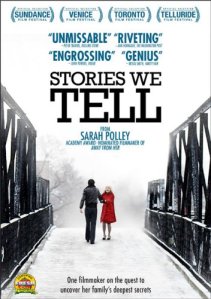
The film map is easy to curtly dismiss in these reflections, thought not easy to disregard given my love for Alison Bechdel: Like nearly all cinema, it consists almost entirely of films made by men about men’s lives, Sarah Polley being the exception among directors and the astonishing Michelle Williams being at least minimally represented by my otherwise-arbitrary choice of Synecdoche New York among Kaufman films. These two brilliant women worked together on Take This Waltz, which I greatly enjoy but do not quite revere enough to map in the map. The also-astonishing Harriett Andersson certainly deserves a good deal of credit for much of Bergman’s exceptional cinema in the early fifties, and Smiles of The Summer Night (thanks to Robin Wood for underscoring the importance of “the” rather than “a” in the title) is indeed my favorite Bergman film and the kind of quirky selection as a favorite that is likely at least in part a self-conscious effort to mark myself a Bergman fanatic by not selecting Wild Strawberries or Persona or whatever.
But the music map disappoints me because like cartography inevitably must, like a Mercador projection world map that magnifies “just because it makes the map readable, merely for that entirely objective reason” North America and northern Europe and white Russian Asia all bizarrely out of proportion to the lands of dark-skinned peoples inevitably must, my music map retains traces of those I have worked a listening lifetime to erase: P!nk, who inspired the creation of this blog and its two earliest entries; Cecilia Bartoli, who kept my blogging voice briefly engaged when I was otherwise silent for many months and whose example encouraged me to keep looking for the pedagogical in the musical; Courtney Barnett, after whose wonderful second album I have entitled this post–their traces remain within this disappointing topography.
And then I think about why these three women stand out, and why I also thought about including Janelle Monae even though I’m just getting to know her work: Integration. What I wish for the legions of people who cannot hear what I hear in P!nk–some inured to pop as genre, like REK, and some who embrace pop but are deeply confused about P!nk, like JJS–is that they could hear how her bubble gum pop fully, compellingly, passionately integrates the classic rock of my youth and the hip hop I spent my youth ignoring and the parts of the country tradition that have not been colonized by Mutt Lange (by the way, Shania’s hits are tremendously fun but she is not an integrator, and so I’ll stand by the rude swipe here even as I stand by the label “tremendously fun” when arguing with KAAG). Integration of the sort practiced by P!nk is musically radical in that it reaches into the core of these idiomatic traditions and synthesizes not what has been generically reified in them but what is vibrant in them. And so with Bartoli across a bewildering range of classical voice traditions, and so with Barnett across rock and folk and punk and what was once “alternative” before the term became a genre and no longer an adjective.
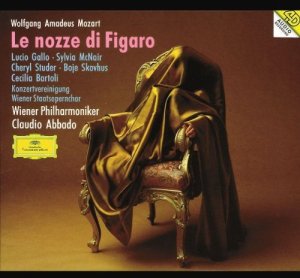
I am glad to spot these lines of connection in my topography of gendered erasure, as they also help me defend my admiration for P!nk and Bartoli as artists within an aesthetic logic that deifies authorial originality. A friend who has turned me on to more music than anyone else in my life, the same friend who turned me on to Barnett, is skeptical about P!nk in part because she does not write her own music but, instead, collaborates with professional songwriters and arrangers and adds her own lyrics. Yet the same could be said of Bartoli, if we realize that one person who was a professional songwriter and arranger who gladly left it to others to add lyrics was Wolfgang Mozart. First of all, imagine that guy looking for work in the Nashville scene in 2017. Second of all, isn’t Bartoli not only an artist but a profoundly original one worthy of the same respect I have been taught my whole life to give to great musical integrators like Prince and Miles Davis? I’m too steeped in cultural studies, in the ideas of Barthes and Derrida and Spivak, to continue worshipping within the cult of authorial originality–especially when, as Spivak would insist, “authorial originality” entails “enshrining individual men and erasing collaborative creative community.”
So I think I have to return to the film map after all, even though it contain far fewer traces of gender diversity than the music map, because film might be the most necessarily collaborative of all art forms–the film apparatus itself and its ancillary instruments and materials requiring, across both time and space, the intervention of several artists at least. Yet the Bergman line of influence never begins, functions like a dead end in my map because Bergman’s cinematic universe is so insular, so unitary, there’s nothing in my film-watching experience that fits as an influence except Allen and I cannot bear to put one of that guy’s films on an artifact I create. How could Bergman feel this way, aesthetically, given the collaborative qualities intrinsic to film as art? The best answer I have to that is: the mountain of prejudice created by centuries of patriarchal art, patriarchal art consumption and patriarchal art criticism. Given that weight, I suspect P!nk, Bartoli and Barnett are likely even more powerful artists than I, as a fan, realize myself–that’s quite a mountain in which to make some cracks appear.
I welcome suggestions from readers of any women musicians and, especially, filmmakers I should be checking out.
 Selling Dust
I do encourage you to take a listen to the artists on my 2016 music list – while all of the artists are based in North America or the UK, they are an otherwise quite diverse group (racially, ethnically, and musical style-wise) group of women and queer and trans folks. http://evesapple.blogspot.com/2016/12/2016-albums-to-help-us-navigate-and.html Also, Martha Wainwright didn’t make this particular list, but her 2016 album Goodnight City is pretty astonishing.
The thing I would say about cinema is this: I hear you absolutely about the collaborative nature of film. But it is also a far more resource-intensive art form than music, especially with all of the alternative modes of recording and distributing music that exist today. Making and distributing music is far more possible for people without access to vast resources than filmmaking is. Even the most independent film requires large amounts of money and access to distributors, etc. Though other factors are at play, control of the industry by white men, and therefore control of the resources, means that resources are systematically being funneled to other white men. We’re seeing this being strongly critiqued now, and some new models like Netflix and the ongoing Golden Age of Television are opening up some new avenues for new voices to be heard (Luke Cage, Mr. Robot, The OA). But movies are still a hard nut to crack, as we saw with the case of Ava DuVernay (her quote about how as a black woman she may only have one shot whereas white men can make crap and still get other chances is worth finding). All this to say, it’s not your fault that your favorite filmmakers are white men; mine are, too, because that’s who is able to make films. I find myself more and more looking to “TV” to be astonished and challenged these days, and to find the faces I’m interested in seeing in front of and behind the camera.
Agreed on film as resource-intensive–Amy often makes the same argument. I have enjoyed perusing your list of 2016 music these last couple of days and will dive in when I return from holiday. Thanks for the comment!