
Spoilers galore, but in my defense I write here about one film (a current release) that few people will be lucky enough to even have the opportunity to see in the theatre and several others that are precisely the opposite in terms of ubiquity—if you haven’t seen most Marvel and DC films by now, I can’t help you with that at this point.
 Amy and I saw a terrific film this past weekend, along with Violet (just the right companion for this picture), an “art film” with a quiet release titled Maudie. The main character is a physically disabled woman who, over the course of her long life, becomes a famous painter through persistently dedicating herself to her art amid a life of economic marginalization and gender–and–ability–based disregard. The story is also a love story and therefore more complicated and compelling than what I’ve summarized here, but one way this film has affected me is through its very persuasive answer to a question I often find myself asking, even if only subconsciously, when I watch a film (especially on the big screen): Why is this cinema? Maudie is the sort of movie that can be described as a “chamber film” in that its relational and psychological themes involve intimacy and small gestures, and in that its durational drama develops merely through the unfolding of time rather than through shattering events or shocking realizations; indeed, much of it takes place indoors within a small, shack–like wooden home. But the film thoroughly presents itself as cinema, from start to finish, in its visual attention to the main character’s ways of walking (often for many miles) and painting; in its use of horizontal space in gorgeous scenes like the one in which Maudie no longer struggles valiantly to keep pace with her single–mindedly–wagon–pushing–and–lacking–in–empathy employer/future husband but instead, without any diegetic warning, now rides in the wagon, adding to his burden, as he moves across the screen; and especially in the heart–wrenching concluding moment when the elderly, now–widowed husband, who once barked at Maudie “Who told you you could paint that?” as he stared meanly at a tiny corner of his bare, ugly hovel that suddenly included a few painted flowers and who grumbled a warning that such images ought not to appear in other places in the house, surveys in his mourning a space that has been utterly physically transformed in parallel to his grudging and partial humanization, adorned in every inch both inside and out, from screen edge to screen edge, with Maudie’s spirit and with her creations, and closes the door to blacken the screen for good. This survey, this metonym, this final curtain are quintessentially cinematic ends to a film that has been in its patient, precise way quintessentially cinematic.
So my enthusiastic response to this film reminds me, as does my adoration for La La Land and Arrival described in my last blog entry, that I am a cinematic formalist. No matter how compelling the story or characterization or effects or performances, a film only reaches the upper echelon in my experience when it meaningfully answers for viewers the question “why is this cinema?” And today on my drive to work I was thinking about Maudie and cinematic formalism and the two recent comic book film releases I’ve seen over the past couple of weeks, Wonder Woman and Spider Man: Homecoming, and I have a quirky idea about Marvel and DC that I’d like to develop here. In a nutshell, this is the idea: While these two corporations have certainly approached big–budget films in ways quite different from one another, ways that can easily help account for the wide disparity in artistic quality and in profitability that shine favorably on Marvel and unfavorably on DC, there are important aspects of the heroes themselves in each universe (as characters on paper) that, prior to any filmmaking choices at all, make the Marvel universe significantly more cinematic at its heart than the DC universe. In other words: DC never had a chance, due to its heroes vís–a–vís Marvel’s heroes.
 Cinematic art depends on transformation of space—through the compression of telephoto lenses or the elongation of wide-angle ones; through the camera’s direction of our perspective on the image; through framing; through the composition of the mis–en–scéne; through editing techniques—as that transformation takes place in time over the progression of the film. Transformations of ordinary experiences of space and time are also the stock in trade of superheroes, as the definitive superheroic descriptive mantra of Superman reminds us that he is special because he is “able to leap tall buildings in a single bound.” Sticking with DC: Batman uses his wealth to alter space and time through deployed technology and disciplined technique, like a film director; Green Lantern, too, treats space and time in the cavalier ways only available to a human possessing alien technology; The Flash makes space irrelevant by accelerating time beyond recognition; Aquaman transforms the space under the surface of the water, a space typically set apart from oxygen–breathers, and uses that space to reorder “for good” the space above the surface; Wonder Woman prohibits others from using space in one of its most common forms, as a visual field to lay eyes on her, and uses space to her own ends via her lasso; and Superman is who he is because he can do all of this, a power that impinges upon him by utterly collapsing the physical and temporal distances most of us take for granted and leads him to flee from the resultant crush in his Fortress of Solitude.
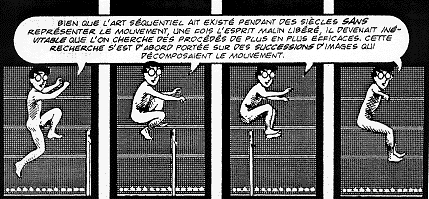 In these respects, superheroes in general and these DC heroes in particular would seem to lend themselves to cinematic treatment. But they did not originate in cinema; they originated in the panels of comics, sequential art unfolding across the creases of newspapers and the staples of small magazines. Scott McCloud argues that the heart of sequential art as a form is the way the sequence of paneled images works on us—stimulating us to enflesh the gaps between consecutive panels with the meat of our own imaginations. One reason superheroes and sequential art match so well, according to McCloud, is that their extraordinary (I would suggest extraphysical and extratemporal) qualities are, at once, imagined for us in the panels and left to our imaginations in the space between the panels. They are always collaborations between artist and viewer and, therefore, the more super still as a result.
How might we reimagine these heroes’ supernatures in cinema? How might the materials of space and time in cinema help explore what makes them special? I believe one answer rests in the distinctive company ethos separating Marvel superheroes from their DC counterparts. One element of this distinction that has been widely discussed among historians of superhero fiction is that Marvel characters—emerging as they did in the 1960s as challenges to DC dominance in parallel to the 60s counterculture’s challenge to atomic corporate patriotic hegemony—are usually from their inception imagined as tragically flawed, psychosexually damaged and existentially alienated from both their powers and their moral obligations as heroes (Iron Man, Spider Man, the Hulk, and Wolverine are the four most vastly famous examples and probably remain the four most interesting to this day, in my opinion, but this sensibility is pervasive in the Marvel universe). DC characters finally started to catch up on this modernizing thematic milieu, a bit, in the 1970s under O’ Neill and Adams’ reimagining of Green Lantern and Batman. 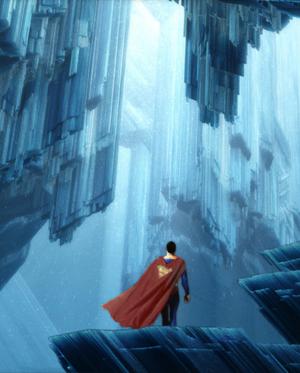 And when the DC characters were put more rigorously through modernizing paces beginning in the 1980s (most famously with Frank Miller’s work with Batman, though many others followed), the complexity of their characters became largely unmoored, in terms of their development of anxieties and ambiguities, from their powers except in the very broadest sense. Superman’s Fortress of Solitude is perhaps the sole example, and a thin one at that in terms of a deep existential snarl, of a hero’s powers themselves prompting unique transformation of the character who has those particular powers. Bruce Wayne is often held up as DC’s most intense, textured example of a hero experiencing torments rooted in his own choices and concerns—but those roots are sculpted in his most famous origin story by his witnessing of his wealthy parents’ murder and his vengeful taking up of their legacy of wealth and civic patronage by becoming the Batman. Nothing about the taking up of wealth itself poisons the well of his transformative powers as they thrive among gizmos, gadgets, gliding and guile; his wealth becomes an explanatory, descriptive dimension of his character but does not function as a tool he or others might use to analyze his power or to inoculate him with a cancerous nemesis that his power, recursively, cannot overcome. Compare Bruce Wayne to Tony Stark: For Wayne, his own corporate technological conquest of the limits of space and time is a means to an end, and though the end itself begins, belatedly, long after Stark has been imagined into being by the great Stan Lee (and his collaborators), to come into question for Wayne, the conquest of the limits of space and time remains a means even as he broods about the end. For Stark, who might on the surface seem like Lee’s greatest ripoff, Iron Man his Windows OS to Bob Kane’s Batman/Mac OS (brooding wealthy CEO uses his company’s resources to armor himself into immortality), from the outset Stark’s corporate technological conquest of the limits of space and time reveals itself as an already inadequate bulwark against the problems the conquest creates, such as socioeconomic disparity, rapidly changing military capacities and the fateful necessity of the superheroic act of combating alien (in multiple senses) invaders as a distraction in a world marked by the ordinary human misery of alcoholism and frustrated relationships.
 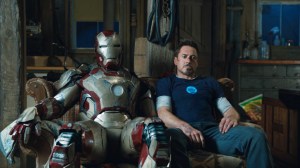 The point of the Wayne/Stark contrast is that it is a synecdoche for the DC/Marvel contrast: DC superheroes’ characters develop psychologically and relationally primarily along with their unique powers, while Marvel superheroes’ characters develop psychologically and relationally primarily from their unique powers. From Peter Parker to Dr. Banner to Logan to the mutants to Reed Richards and his friends, this quality is right on the surface: In the Marvel universe, the superpowers themselves are the conflict and the crooks/evil geniuses/aliens are more like set design.
So, to return to the question of how we might reimagine the heroes’ supernatures in cinema as they move onscreen from out of their joint creation in the “gutters” McCloud describes in sequential comic art: Cinema involves transformation of space over time, and a group of superheroes whose transformations of space and time are themselves dramatic questions come to life vividly onscreen, while a group of superheroes whose transformations of space and time are ancillary to their characters’ conflicts has two weaknesses thwarting its move to cinema, one of which I care about a great deal: First, cinematic success or failure in the DC universe, because the drama is external to the superpowers themselves and their transformation of space and time, will depend much more heavily than in the Marvel universe on the quality of screenwriting, direction and performances (I actually think all three elements have been consistently better among Marvel films than among DC films, but I suspect the reasons for this, if they’re not arbitrary, can be traced to corporate business decisions about which I barely care at all); second, cinematic success or failure in the DC universe is not really cinematic at all in the sense of its exploration of the characters themselves. The cinematic form is not integrated with the aesthetic questions raised by superpowers. A DC film might happen to be cinematically interesting, even to a formalist like me (The Dark Knight fits), but this is mere happenstance resulting from Nolan being a clever director and has little or nothing to do with what makes Batman interesting on the comic page. Every time Peter Parker slings a web, every single time, even in the lousiest Spider Man films, we can feel his character building from the act itself, and this has nothing whatsoever to do with the presence or absence of Heath Ledger (rest in peace)—it’s about what’s true in Marvel and not true in DC, it’s about the integration of form and theme.
What’s even better, for Marvel, is that cinema can affect us in different ways. At times the cinematic apparatus masks itself, with analytic editing and naturalistic camera work and images drawing us into a world marked by its verisimilitude with respect to our own; at other times the apparatus reveals itself as an intervening force constraining our engagement with what it presents to us. What this means in terms of the Marvel universe is that Stan Lee’s magnificent sense of irony, so central in Marvel, is itself cinematic—the “apparatus revealing itself” moments are laced throughout, with the famous “stay until all the credits are over or you’ll miss a preview spot” and Lee’s cameos in the films themselves just the two most coarse examples. Even when DC tries to embrace the modernist impulse, when Denny O’ Neill or Neal Adams or Frank Miller or Alan Moore or Grant Morrison do their work, ironists all, it never quite takes root. Irony always feels layered over the top in a DC universe created and marked by an overwhelming earnestness. 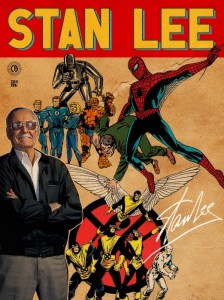 Maybe this is why Wonder Woman worked pretty well on film: She is nothing if not earnest, and in this way might be the ultimate DC character in the same way Iron Man is the ultimate Marvel character. In Marvel, though, irony doesn’t need to take root; the soil itself has as its primary mineral content Lee’s irony, from patch to patch to patch.
Captain America is, unto himself, an encapsulation of the DC universe; he’s the male Wonder Woman, earnest to a fault, spawned in the same orgy of patriotic fervor. Maybe that’s why it’s so delightful to see his portrayal in Homecoming. No one should be allowed to make another DC movie, not even another Wonder Woman or Suicide Squad film, until that person can author a persuasive document (I’d prefer a 10–page essay, but I suppose a short film would be appropriate) comparing and contrasting Captain America’s character in Homecoming to at least three cinematic instantiations of DC superheroes. That’s what would be true, anyway, if I, a cinematic formalist, was King of Hollywood.
 Selling Dust
In Jill Lepore’s Secret History of Wonder Woman, she explains that Wonder Woman’s uniform was being designed the same month Timely’s Captain America debuted — and the US entered WWII — and her costume was a riff, albeit a much **briefer** one, on his.