
I: T.ogether S.waying
A flock of swifts is called, ornithologically, a screaming frenzy. A screaming frenzy of swifts. That phrase, by itself, is beautiful enough to be this entire blog entry on Taylor Swift’s live recordings: A screaming frenzy of swifts. But here I go nevertheless, daring to write more.
The only thing that keeps me wishing on a wishing star
We choose wishes. Dreams and impulses and attractions and passions we don’t always choose, exactly; you grok this distinction as well as anyone, this wish, this summoning of a star, by your relation to our closest star, your sun sign ramming it home for us: Passions can overtake us, while wishes, we choose.
You chose me to share your passion for live shows, for which I am forever grateful. By my count, we’ve swayed together at thirteen major shows, more than I have with anyone else, even the person I’ve shared my life with for twenty–seven years. These include two towering figures in our intertwined musical journeys, Bob and Pete, as well as two others who grace this blogspace, Courtney and Chris. Almost half have involved the deep immersive flow of your special passion to end all passions: I know intimately how it feels to be all the way inside the groove that need never stop. I want to feel that again. You phished your wish.
Our shared swaying at these thirteen shows has embraced, to use Sanneh’s seven genres as a typology since he first inspired my wishing on the Swift star, and to consider opening acts and key streams of influence: rock (much) and r&b (a bit) and country (some) and punk (plenty) and hip hop (a bit) and dance (one marvelous rave until past 3am). But if we leave out random commercial fluctuations that feel like a sledgehammer, shifting tastes that can be hard to handle, mainstream waves of celebrity that can crush our sensibilities like a rolling stone, and instead treat Sanneh’s seventh and final genre not like these ephemera but like a lasting aesthetic idiom, then you and I have together essentially eschewed pop.
TS embraced pop before pop embraced her, her earliest work in the purported country idiom unmistakably woven through with the bright baubles that bear the marks of the pop sound. The gleaming polish of the show tune, the instinct for the hook that we cannot forget even when it’s interrupted by the break we should have heard coming because it’s a chordal and rhythmic trick used a million times in a million songs but that exhilarates us anyway—she absolutely shares these songwriting sensibilities with people like Lin–Manuel Miranda and Elton John and Noel Gallagher, absolutely executes at their level. Speaking of Gallagher, he’s beloved by J, who you finally just met at Courtney. J’s obsessed with the Beatles, as you know, and idolizes Steven Spielberg, as you might not have. I’ve finally come around on Spielberg, after J working on me for decades, because Spielberg studies every detail of his artistic idiom and then executes these flawlessly, in film after film, to make popular art that’s intelligent but also broadly accessible. Just as John and Paul did. Just as Taylor does, a single–minded and superior student of sonic spectacle since she was small. I am finally outgrowing the immature soil in which my musical taste sprouted, fertile soil seeding my search for innovation and edge that was a mixture of metal resistance to prettiness and indie suspicion of success but that buried me so that I struggled to hear pop. P!nk gets a good bit of credit for digging me out. Sanneh’s marvelous example of anthropological openness, his passion for understanding genres from the inside, gets a good bit of credit too. I agree with him that thoughtful, persistent creative expression and development within a set of generic conventions, not in spite of an audience’s expectations but indeed because of them, is artistically fulsome and worthy and generative.

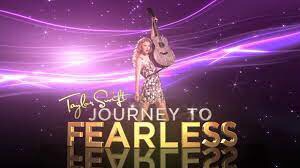
What does this have to do with you and I swaying together at live shows? With Journey to Fearless and Speak Now Live, Swift’s performance films that I set out to explore in this entry on my TS journey? Here’s what: For this artist whose work has emerged entirely in the twenty–first century, a century in which music has moved from discs to downloads to streams and in which barriers of niche and access have crashed down so that artists can cherry–pick any sounds that move them from anywhere and anytime, for this artist to honor albums (and, more broadly, physical media releases) by centering the Speak Now Live set list not on her then–rapidly growing body of big hits but instead on the most recent album, performing all but two of its tracks, well, pardon the pun but that speaks to me. Here’s what else, even more so: “Love Story” is so deeply entrenched in musical and lyrical tropes that have been worked seemingly backwards into infinity that, for heaven’s sake, it’s characters are called Juliet and Romeo and the song is called “Love Story.” Talk about wearing your lack of interest in appearing to innovate right on your sleeve. And you know that feeling when Maiden plays the opening guitar notes to “Rime of the Ancient Mariner” when you’re at the Powerslave show? That’s the feeling, just like that, when those guitar notes come through the speakers near the end of Speak Now Live and it’s the opening of “Love Story” and you can’t wait for each chorus to land in the most musically and lyrically predictable place possible, the opposite of innovation, all of the past of popular art fusing together, Romeo exhorting Juliet and Taylor exhorting each of us to Just SAAAAYYYY YES!!!!!! And yet it indeed innovates, because it inspires, because as I am when I with you phathoms deep in the “Tube,” I am transformed in that moment. I am among the screaming frenzy, even though this moment was recorded more than a decade ago. I can’t conceive of what else the communal ocean of shared swaying is supposed to be, if not millions of people brought together by the magic of media and the energy of a single recorded show and the intoning of a single well–worn set of musical and lyrical tropes by one celestial superstar Swift as we all together say YES.
She keeps me wishing on a wishing star, is what I’m saying. Disney was a key part of my life story, as you know, so I know well what this choice is, the choice to say “yes” even when you know it’s a glib fiction, a fairy tale in which we together agree to make belief. She once, a young girl, wished on a star, and sure enough she brought it down, wrestled it, and inhabits it now, sails on it. She ratifies Sanneh’s thesis even though he gives Swift somewhat short shrift in his book, as she changes music through dedication to building on generically legible engagement and extension of specific audiences. Genre–based art, after all, is at its worst when in an acontextual frame of purported transcendence (despite obvious efforts to push against this by editing choices in the two films, the TS audiences at least then were almost entirely white) and at its best when it functions as a way for audiences to engage a precise context recognizable to them. The unison–yes–saying is a big part of it: These two concert films leave no doubt that thousands of people at each and every show know each and every word to each and every song. And vitally, her aesthetic cultivates this choice to belt every syllable from the audience, invites it quite intensely and deliberately. There are plenty of carefully choreographed costumed dancers (unusual in the country live idiom when introduced in the Fearless tour) and gaudy sets and trapdoors and tap routines and that jazz—but in my humble, admittedly mediated–and–thus–remote opinion, the songs themselves and the attendees’ love for them and wearing of them, of the songs, like costumes, like badges, those songs that she wrote are unequivocally the stars of these shows. I wrote in an earlier blog entry of my admiration for P!nk because she solved the problem that, with the artistic imaginings and technological innovations available to him at the time, Paul McCartney could not solve in 1966: How to make meaningful art, in concert, together with the screaming frenzy rather than succumb to the apparently deafening and deadening cacophony of the frenzy’s rigid expectations and relentless exclamations? P!nk’s solution is to perfect the spectacle—her stunning athleticism of voice and body leading the frenzy, creating a vision for us that takes our breath away and carries us forward on her breath. Swift’s solution, different but just as effective (at least based on my much more indirect filmic evidence), is to eagerly embrace the parasocial hunger of the frenzy for identification and acknowledgement—her incessantly memorable (in best pop style) songs and lyrics filled with hooks and riffs and simple, direct themes, and her coquetteish, winking chatter of mini–stories between numbers, and her hug–including walks through the crowd, and her constant begging for a combination of admiration and affection rooted in similarity of aspiration supposedly shared with Swifties throughout the stadium, these combine to make the frenzy’s simultaneous screaming into sonorous, ocean–size simpatico (look at my love of Español etymology!) of the very sort that Macca still clearly craves but then could not carve out with the tools in his grasp.
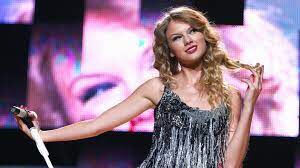
And even though I feel fully warranted in describing her as engaging in “constant begging for a combination of admiration and affection” as she performs, I will also fully grant that she wears it extraordinarily well—I swear, dude, it does not come off as off–putting in the slightest. In fact, it’s a big part of her charisma. Again with apologies for knowing P!nk’s charisma from direct sharing of the room with her but not having done so with Swift, I will say that they have this in common, this particular form of charisma that invites, “Love me MORE because of how great I am!” that I find myself wanting to affirm. At the requisite moment in the Speak Now Live film, instead of following the time–honored and frankly ludicrous pact of live performers for decades pretending not to care when the lighters are in the air, even though their very own light operators are supposedly magically choosing right now to dim the lights, Swift calls it out, to my shock, violating the ludicrous pact by making jokes about flashlights and asking directly for all cell phones to go aloft. The camera catches her many, many times across both concert films just standing there and unabashedly basking in the adulation. It lights her up. It makes her glow, and that makes it feel ok that we’re all willingly making her ever richer and ever more powerful just so that, with her, in response to her palpable need for love, we can say YES!!! To her great credit, and impressively even through the mean–spirited feelings on some of the Speak Now songs, I feel like that love does genuinely come back to us in the process. That’s the wish we choose when we buy tickets, the wish we make upon these musical stars, I think, you and I, when we sway together with thousands of strangers in concert: We want the love we give to come back to us.
II: T.eaching S.cholars
Pop is a paradox of a genre label: It’s perfect on the level of the sound surface, frequencies that flicker brightly against the backdrop of an insistent beat, music that dances into our ears and memories and slickly seduces us. But you and I study messages that not only endure but also fade; you and I know that pop can slide away just as quickly, just as its “newpop” ambassadors once swore it should, pop embracing its ephemerality as it melds into so much of the culture, suffusing so many sonic spaces that it’s stretched thin enough to risk forsaking the specificity that can lastingly etch a song’s aesthetic and musicological lines.
If you live like that you live with ghosts…if you love like that blood runs cold
1989 is as good a pop album as I have ever heard. Yes, it might even be as good a pop album, objectively, as The Truth About Love, even though subjectively I will never love it nearly as much because I fell into undying love with The Truth after you took me with you to that stupefying live performance, still easily the best concert of my dozens–of–major–act–concerts lifetime. But 1989 is, as I hear it, a colossal, overwhelming icon, a fearsome idol representing all the things pop can be, its sounds sewn permanently into the sinews of the worldwide sociomusical body of the early 21st century—1989 glittering like the smoothest and prettiest of sonic pearls, as cool as any “Style” could ever be, its vibrations sweeping past us with the relentless and unbroken pull and press of the skyscraping canyons of “New York,” each track polished to a glassy surface for listeners’ liquid longings to pour into its “Blank Space,” its “Bad Blood” always not just running cold but hardening into ice, its passion always protected by its production giving it “Places” to hide. Absolutely, without any question, when I reach the end of this album, through astonishingly distinct aesthetic means than Shostakovich uses in his work, I know just as certainly as I do when listening to him that after this blasted journey with the most unyielding, crystalline pop, I am indeed finally “Clean.” And I yearn to reanimate, to let my veins flow crookedly and unpredictably again with the broken, unsteady aliveness that teeters so breathtakingly on the razor–thin songwriter–popstar braided gossamer thread Swift perched on one album ago, the album that can again enflesh me anew as I explore the web of her work in ordered chronology, the album that for me among the first five that bore her aloft into the celebrity stratosphere is her best, Red.
And all we are is skin and bone…forever going with the flow, but you’re friction
I learned long ago that my recall for people I meet, for faces and names, moves with greater ease for me than it might for many others. I’m also outgoing around new acquaintances, leaning always into the get–to–know–you. So over time, I’ve learned to stay steady and calm, to let most of the newly met meld into the social melange, since just because I remember someone and how we momentarily connected doesn’t mean that those others will. Not wanting to hurt others’ feelings, not wanting to feel hurt again over and over by others’ lack of recognition, their rejection of a bit of shared time that I stored up, I learned to lean gently back. But you, who I met among dozens of other Master’s students at SFSU and SJSU in that time frame, you pulled against my lean. I wasn’t sure what you wanted because I never know what others want, but you wanted friendship and teacherly–scholarly collaboration, both. I warmed a little but retained some caution. You pulled harder. You never said that this was “The Last Time” you were asking me this. You insisted that we would matter in each others’ lives. And now we do, and I am so much better for it, with you and your partner and your fabulous kid sharing your journeys with me, you three having popped out of the melange and become particular Others.
And I never saw you coming…and I’ll never be the same
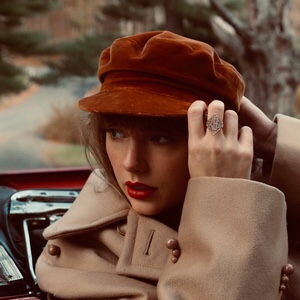
Like you, I make choices to lean in hard, too, most obviously in my insistence that the best way for me to engage most art is not to skim over the cultural surface, buoyed aloft on the waves of in–the–current–moment sounds and sights but, instead, to spot a special interest (often one long subsumed by the ocean of all that’s been available to me yet unexplored, like long–dead filmmakers and music my mother loved and, yes, Taylor Swift) and dive all the way in, coming up for air only when I can feel a particular artist all the way inside my lungs and veins and then that artist has changed me in a particular way. I can feel that change happening with TS along many channels, one of those being that Red confronted me immediately, the very first time I heard it a couple of weeks ago, as an exceptional achievement. Yet had you in your pop wisdom somehow made me listen to this album in its entirety, say, two months ago, I would have had no texture by which to hold on and let it enter me, and it would have drifted by, unappreciated and never again touched. And I would be so much the worse for it, heedlessly yet nevertheless so. Some sounds are textured, roughed up, coarse in the best ways even when glossily sculpted, and I can hold onto them. I started out in my own screaming frenzy, belatedly, with the advice from an old friend and Swiftie to go chronologically, but I also let myself texture my ride by letting 1989 in right at the start. 1989 is an exceptional achievement too, for all the reasons I strive to sketch above, but Red—Red pops like no other for me, Red pops even more than the perfect pop of 1989 pops. Red pops like its eponymous color pops in that majestic hat in what is easily my favorite photo of TS, the cover image of Taylor’s Version of this album. Why the difference for me between these two consecutive albums of exceptional achievement? By 1989, Swift had conquered the pop world and could survey it and sustain it from the clouds, from above, letting its cold breath bring musical oxygen into every tiny space of the culture, every tiny space, even the ones that purport to be airtight. How am I sure? Even I, ignorant as you know I am about pop, can feel that the sounds of this album have flowed inside me for years and years, in every shopping mall and every movie soundtrack and every streaming service that rushes by half–noticed. The only song I knew before was “Shake It Off,” yet somehow I also knew every song, every note of 1989, the way Taylor and I both knew New York City curb for curb and street sign by street sign even before we’d ever been there ourselves. 1989 has melded fully into the culture, become one with it, oxygenating it. But the other eponym image for Red underneath that majestic hat gets at, for me, why this earlier album, despite it being her supposed first firm step into pop, into the type of music that by nature melds into the culture, why Red still pops with particularity, giving us something to hold, something warm and alive—because like blood, this earlier album bears the oxygen of that pop stream of sound and never lets it go, always keeps it, but bears it through the scarred, scared, suspicious, starlit–eyed, yes, sanguine sensibilities of a country songsmith still strumming, still humming, not yet hardening those scars, not yet over Jake despite her constant protestations, not yet “Out of the Woods” (that video is really, really strange by the way—have you seen it? She succeeds in looking even without fake fur like a human wolf), not yet out but still down in it, still down home, still dueting with scruffy boys from the UK, still letting her Joni–Mitchell–honoring writing style “Breathe.” And because she fuses pop sheen with the support of her established songwriting structures on Red, this record resists the meld just enough to persist in particularity. Flow, but friction. Alive.
Yes, I know we need both. We need fire and ice. One mark of the twin exceptional musical achievements of Taylor Swift in 2012 through 2014 is that she gives us both in full force, gives us fire then gives us ice, and we feel both all the way. What more can we ask art to do? But I favor the fire. You and I know that despite the starkness of Ravenclaw’s intense focus on learning, despite the flexible sinews of Hufflepuff’s growing in community, despite the slipperiness of Slytherin’s proud insistence on nimbly navigating through anything, what all four Hogwart’s houses share is some stake in burning, animating energy, some portion, all of them, of the famed Gryffindor fire. I favor the fire.
 Selling Dust